Search This Blog

Showing posts with label Fr. Timothy Radcliffe. Show all posts

Sunday, November 5, 2023

Where is God?

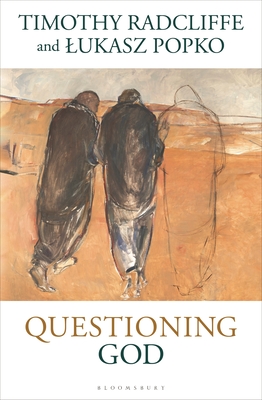
 The discussion with my "cloistered brothers" centered on Timothy Radcliffe's new book, Questioning God.  This is Father Radcliffe's latest book.  It is a discussion between two theologians: Timothy Radcliffe and Lukasz Popko.  Both are Dominican priests.  

We didn't get very far, because we were hung up with our own opinions.  Radcliffe points out that the first words recorded that God speaks in Genesis is "Where are you?"  (Genesis 3: 9)  My brothers laughed at that because we humans are always crying out to God, "Where are You?" Even Jesus asks that very same question, (Mark 15: 34)

We decided that the questions weren't meant to ask for a location, but rather disposition.  Both humans and Jesus on the cross, were asking for a feeling, or assurance, that God was present.  Intellectually, we know that God is omnipresent but it takes a minute or so to have the presence of mind to trust God.

Jesus dying on the cross is the perfect example.  He would have been resurrected, if He didn't die first.  We must trust Him.

Where is God?  He's waiting for us to prove our faith.


Tuesday, July 22, 2014

We are What We Were Created By.

A Selfie with fra Tim
Five of us trekked down to Christ the King parish to see Father Timothy Radcliffe speak.  This parish has a Summer Speaker Series and Father Radcliffe is their July offering.

We've been traveling down, together for the other speakers, also.  We go out to eat at a restaurant down the Cape, where we can pig out on seafood.  We have a very good time.

Tonight was not a disappointment.  Father was very good.  We sat in front; I sat right next to him!  He leaned over to me and asked me to pray for him because he lost the middle of his Talk.  He said he must have left it on his bed, but the middle of his papers is missing.

It seemed fine to me.  I didn't see anything missing.  He talked about how beautiful our human bodies were.  How important the sense of touch was.  When he talked about the eyes; he spoke about his brother in community, Vincent, who was blind, but such a joy to everyone.  The ears and listening were a major point.  Talking involves listening.  We are made in the image of God, and as such, are beautiful.  We are the presence of God.  We carry Him out into our world.

As we rode home, all five of us, squished together.  We joked about our bodies touching each other and how we were relating as Jesus would want us to.


Thursday, February 23, 2012

Foreword for New Book on Pere Lataste


Here is the Foreword of a new biography on Pere M. Jean-Joseph Lataste, OP, by the postulator of his cause for Beatification, Fr. Jean-Marie Gueullette, OP. The Foreword is written by Fr. Timothy Radcliffe, a well known writer, speaker, theologian, and a former Master of the Order of Preachers. That's me holding his hand. He's standing between Alpha and Omega.

Foreword for the book by Jean-Marie Gueullette OP

I began to read this biography of Jean-Joseph Lataste with a little trepidation. For a long time I had admired him as a brave Dominican who opened his life and his heart to women in prison and founded the Bethany sisters. He was a sort of grandfather to one of my favourite Dominican fraternities, in Norfolk State Penitentiary. But when I read his life, would he turn out to have been quite so admirable? Would he emerge as someone so marked by another time and spirituality that he would seem remote? The great joy of this wonderful book, for me at least, is that I found him to be even more attractive and inspiring than I would ever have guessed.
Jean-Joseph Lataste was a deeply affectionate person. He loved, and he loved to be loved. The moving account of his young love for Léonide Cécile de Saint-Germain shows him to be a man with a heart, flesh and blood like us. This same desire to give and show affection is apparent when he enters the Order. He develops friendships with the brethren, and even after he had founded the new congregation, he was a brother who loved community. He belongs within the long Dominican tradition, from Thomas Aquinas and Eckhart until today, which sees our relationship with God in terms of friendship. God is the one who longs only to be accepted by us and welcomed into our lives as a friend. This warmth finds its most beautiful expression in his relationship with the women whom he met in the prison in Cadillac. His very first words to them are: ‘My dear sisters.’ All of his mission and life is given in those first affectionate words.
He was also deeply Dominican in his cherishing of happiness. St Thomas Aquinas believed that we are created for happiness with God. To seek happiness is not selfish, because we find it in being emptied out beyond ourselves in love. When he arrives at the noviciate, one has an impression that this young man, who had passed through turbulent years, finds deep joy. There is the wonderful scene of two young novices coming to wash his feet, and the obvious immediate affection that they feel for each other.
When he founded his first community of the sisters of Bethany, he cares for their happiness. The choice of ‘Bethany’ is significant. It evokes a home, and so a place where they can be at ease. He did not want a building that would even look like a convent, and which might suggest severity.
Any true love cherishes the dignity of the other person. A sense of his own early failures cures him of any false sense of superiority. Whatever he did in his youth was a ‘felix culpa’, ‘a happy sin’, in the words of St Augustine, which bore fruit in his sense of oneness with these women whom society despised and feared. Certainly, they had failed and sinned, like us all, but Lataste would not let them be defined by what had happened. He was shocked by the way that they were referred to by others, as thieves and so on. A prostitute came to share her sorrow with an English Dominican. She said, ‘Father, I am a fallen woman’. To which he replied, ‘No, my dear, you merely tripped!’
Lataste was baptised opposite a ‘house of correction’, where he would discover his mission, and where women were supposed to be reformed by severe discipline. But Lataste believed in a far more profound transformation produced by God’s grace. He often liked to say that the greatest sinners could become the greatest saints. It does not matter what one has been but who one is now. ‘God is the Being of the present.’ Grace transforms us, and that is why these women could be religious.
Lataste loved the saints who had lived through experiences of sin, but whom grace had raised: Mary Magdalene, the first patron of the Dominican Order; Peter, who had denied our Lord; Paul who had murdered the earliest disciples, St Augustine and so on. When he talked with women in prison he was bowled over to see the effects of grace in their lives, their readiness to forgive those who had often seduced them and destroyed their lives. When he held a night of adoration of the sacrament, he saw hundreds of these women coming to pray devotedly, and he cries out ‘I have seen marvels.’ Jean-Marie shows how this cry resonates with that of St Catherine of Siena, who after profound contemplation, shouts out ‘I have seen the secrets of God.’ But the moment of revelation for Lataste is given in the faces of those to whom he has been preaching. It is a spirituality of mission.
Lataste is shocked by the silence imposed on the women in prison. This terrible silence is broken when he hears their confessions in the sacristy. It is pierced by words of compassion, the words of their brother and the words that they are free to speak to him. And when he makes an unauthorised visit to the prison, and cannot speak with them, they know that he is there for them, faithful in his friendship. The Resurrection of Jesus is the speaking again of the Word made flesh, silenced on the cross. Our faith breaks the oppressive silences in which so many people are imprisoned.
He was also aware that his new foundation did more than offer a home for a few women who were called to religious life. His brochure, Les Réhabilitées, in which he described his daring project, which he believed was the work of God, was also a prophetic gesture, addressed to his fellow citizens. It touched on issues that were of public concern. Victor Hugo’s novel which comments on life in prison, Les Misérables, had been published recently. It remains a prophetic gesture which still speaks to our society, in which an ever higher percentage of the population finds itself imprisoned not just by walls and bars but by prejudice and contempt.
Blessed Jean-Joseph Lataste began this new foundation when he was extraordinarily young, and died when he was still in his thirties. He endured opposition, even sometimes from his own brethren, though supported by the Master of Order, Alexandre Vincent Jandel. This confidence in the young was typical of St Dominic, who sent out his novices to preach when other religious thought that they would never be seen again. We need this confidence in the young today, confidence in young people who find themselves in prison, and also confidence in our young brothers and sisters when they have brave new ideas. May blessed Jean-Joseph give us all courage to do what is new.
Timothy Radcliffe OP
Wednesday, July 15, 2009

Thank You for All Priests


Last Friday when I went to see Fr. Timothy Radcliffe, O.P. give his talk,( 2009 Speaker Series at Christ the King Parish), there was a question and answer session afterwards. One of the comments made at that time bothered me. The comments more than bothered the pastor of St. Anthony's. He said he almost wanted to go over and fight.


What she said was callous. I'm sure she wasn't thinking. In praising the Dominicans, of whom, Father Timothy belonged, she critized all parish priests. She said she lives in San Francisco, California, and travels about 70 miles to go to church. She does this every Sunday because the Dominicans there preach so wonderfully and seem to energize the community, unlike the parish priests.

As a Lay Dominican, I thank the young lady and appreciate her praise of my brothers, the friars. However, as a Lay Dominican, I also feel that I must speak up ( a la St. Catherine of Siena)and defend the parish priest.

It is not difficult to craft homilies to a particular people, if your parish belongs to the academic community. Many people go to the priory, or monastery, etc., to go to Mass. The people who attend these Masses and travel to these locations are often all of the same mind set. A preacher can really hone in on their particular needs.

As Father Costello of St. Anthony's was telling me, it is hard to hit everyone in his congregation. His parish consists of the world. Tourists from God knows where, locals, old, young, Cape Verdeans, rich, poor...you get the idea, make up his parish. And every one of them wants excellent preaching, every week. They want the perfect prayer for every occasion. They expect the priest to be present when they need him. They want the priest to like what they like, and not like what they don't.

The hardest expectation to live up to is that people want them to be human and be a "party animal" when occasions call for that; yet, people want priests to be just like Jesus.

Instead of critizing the parish priest, people should offer to help, try to be non-judgemental, and assist the priest. If a priest moves you to prayer because he celebrates Mass so wonderfully. Thank God for the blessing of this priest. If you think the priest is boring, then pray for him. Ask St. John Vianney to intercede for blessings to fall on the priest. All priests need us to pray for them.

If you have a chance to see the last speaker in the 2009 Summer Speaker Series, I recommend that you do. Many people attended Father Timothy's and the audience was very welcoming to everyone. The cost is free. What more do you want?

The 2009 Summer Speaker Series is held by the parishes of Christ the King, St. Anthony's, and Our Lady of Victory. The above picture is Fr. Timothy Radcliffe, O.P., with Msgr. Daniel Hoye,the pastor of Christ the King, in the background.

Saturday, July 11, 2009

Summer Speaker Series 2009


I'm down the Cape with friends. We're together specifically to see Father Timothy Radcliffe, OP speak. He is a theologian, author and the former Master General of the Order of Preachers. The best attribute he has is that he is an excellent speaker. His English understated manner is quite engaging.

Click on the link I've made above and watch Radcliffe's Talk and you'll see what I mean.

Thursday, July 9, 2009

Fr. Timothy Radcliffe


Today I met, and conversed with, and held hands with, and received Communion from: none other than Fr. Timothy Radcliffe, O.P. That's right! THE Timothy Radcliffe! The famous theologian, the author of What Makes Us Christian, I Call You Friends, Why Go To Church,etc..

He came to Chapter today. He celebrated Mass for us. He hung around and chatted with everybody.

After Chapter, he went to Sister Ruth's cookout. In this picture he is standing between Helen Tice and myself. (Notice I'm holding his hand.)

I also got him to autograph my copy of Why Go To Church.

Need I tell you that he's approachable, personable, and just plain nice. He seems so gentle and kind and soft spoken.

Tomorrow, I'll be down the Cape to see him at the 2009 Summer Speaker Series. The speaker forum is jointly sponsored by St. Anthony's, Christ the King, and Our Lady of Victory Parishes. Down the Cape I go to St. Anthony's. So I'm looking forward to seeing him, again.

Human Dignity

 It just dawned on me that God created me for Himself.  In Genesis 1: 1-31, we see God made everything for mankind.  I'm in awe to reali...