Theologians gather at Boston College for Ibero-American Congress of Theology: CHESTNUT HILLs week long Ibero-American Conference of Theology: a public forum on the Theology of Liberation.
.svg/360px-Ibero-America_(orthographic_projection).svg.png)
I was introduced to Liberation Theology in a round about way. In 2010, Haiti was devastated by an earthquake. Somewhere in my readings about Haiti, I came across Dr. Paul Farmer in the book, Mountains Beyond Mountains by Tracy Kidder.
From then on, Dr. Farmer kept popping up. First, because he's local (Boston) and then because of his humanitarian exploits. Lastly, he lives in Rwanda. Ever since Immaculee, I've been paying attention to Rwanda.
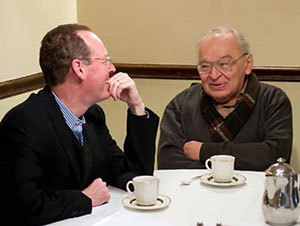
One of the last books I read, In the Company of the Poor: conversations with Dr. Paul Farmer and Fr. Gustavo Gutierrez, plunged me into understanding Liberation Theology. So when I saw that Boston College was hosting a public forum on Liberation Theology, I signed up.
Ibero-American Theology is a theology that puts a preferential option on the lives of the poor in Central and South America. This is known as Liberation Theology because the faith of Ibero-Americans struggles in poverty but always hopes their faith will save them.
I was not disappointed in the forum, even though Father Gutierrez was ill and couldn't attend. The other speakers, Father Juan Carlos Scannone of Argentina, Olga Consuelo Velez Caro of Colombia, and Father Roberto Tomicha of Bolivia related stories of their beginnings, their involvement, and their struggles.
Their commitment to the people inspired me, also. May their work continue to touch the lives of their people.
I was introduced to Liberation Theology in a round about way. In 2010, Haiti was devastated by an earthquake. Somewhere in my readings about Haiti, I came across Dr. Paul Farmer in the book, Mountains Beyond Mountains by Tracy Kidder.
From then on, Dr. Farmer kept popping up. First, because he's local (Boston) and then because of his humanitarian exploits. Lastly, he lives in Rwanda. Ever since Immaculee, I've been paying attention to Rwanda.
One of the last books I read, In the Company of the Poor: conversations with Dr. Paul Farmer and Fr. Gustavo Gutierrez, plunged me into understanding Liberation Theology. So when I saw that Boston College was hosting a public forum on Liberation Theology, I signed up.
Ibero-American Theology is a theology that puts a preferential option on the lives of the poor in Central and South America. This is known as Liberation Theology because the faith of Ibero-Americans struggles in poverty but always hopes their faith will save them.
I was not disappointed in the forum, even though Father Gutierrez was ill and couldn't attend. The other speakers, Father Juan Carlos Scannone of Argentina, Olga Consuelo Velez Caro of Colombia, and Father Roberto Tomicha of Bolivia related stories of their beginnings, their involvement, and their struggles.
Their commitment to the people inspired me, also. May their work continue to touch the lives of their people.