Search This Blog

Showing posts with label Virtues. Show all posts

Friday, July 18, 2025

The Gardener's Virtues

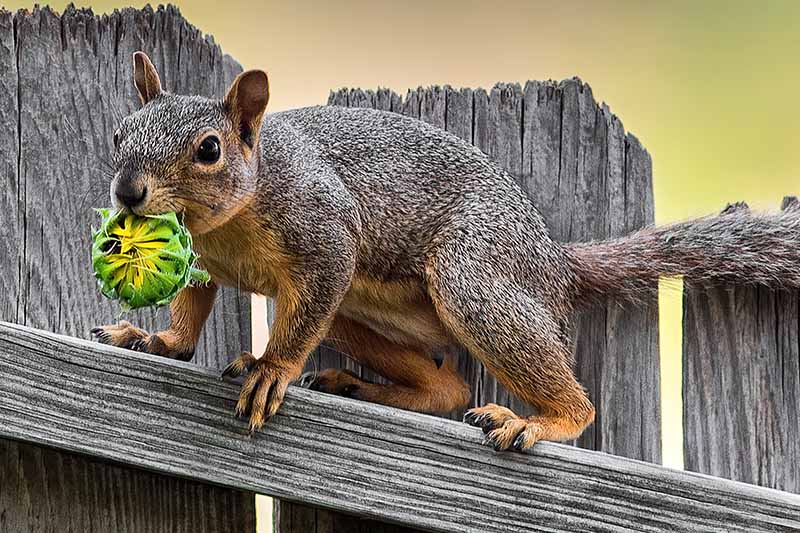
Something ate the entire head of my sunflowers.  Not just the petals--the whole flower bloom.  I don't think a deer could enter my garden with its fence.  Besides the sunflowers are in the last row, so the deer wouldn't be able to stretch over the fence.
     We have a groundhog living under my neighbor's shed.  But she's too fat to fit through the fence.  The rabbits are too fat, too.  Maybe a skinny rabbit.  Do squirrels eat sunflowers?  The squirrels around here are nasty.  They used to verbally abuse my late cat.  The squirrels recently made a hole in the porch screen to get at some food that was left on the table.
    Anway, I was surprised tonight when I was watering the garden that more sunflowers are growing on the plant.  How's that for encouraging hope?  When you think of it, just gardening is an act of faith.  
    Faith, hope and love are the gardener's virtues.  One would have to love gardening to keep at it.  So I guess the greatest virtue is love, after all.


Tuesday, October 29, 2013

The Greatest is Love


Yesterday, I posted the poem, The Faith is First.  And because it is first, I considered it the greatest virtue.  You wouldn't have hope or love, if you didn't have Faith.  Sydney Carter poeticized that in his poem.

While that is true, it's not the whole story.  I have moved beyond that idea.  At the end of life, all that we will have, see, and feel, is Love.  Think about it.  You will see Jesus.  You will be looking at Him, Love, Himself.  You won't need faith because you see Him.  You don't have to hope to see Him; He's in front of you.  All that remains is the love we see in God.  He is Love, Himself.  Love is the greatest virtue.

Wednesday, January 9, 2013

St. Catherine and the Tree of Virtue


Do you know how these three virtues exist?
         Imagine a circle traced on the ground, and in its center a tree sprouting with a shoot grafted into its side.  The tree finds its nourishment in the soil within the expanse of the circle, but uprooted from the soil it would die fruitless.  So think of the soul as a tree made for love and living only by love. Indeed, without this divine love, which is true and perfect charity, death would be her fruit instead of life.  The circle in which this tree's root, the soul's love, must grow is true knowledge of herself, knowledge that is joined to me, who like the circle have neither beginning nor end.  You can go round and round within this circle, finding neither end nor beginning, yet never leaving the circle.  This knowledge of yourself, and of me within yourself, is grounded in the soil of true humility, which is as great as the expanse of the circle (which is the knowledge of yourself united with me, as I have siad).  But if your knowledge of yourself were isolated from me there would be no full circle at all.  Instead, there would be a beginning in self-knowledge, but apart from me it would end in confusion.
        So the tree of charity is nurtured in humility and branches out in true discernment.  The marrow of the tree (that is, loving charity within the soul) is patience, a sure sign that I am in her and that she is united with me.
         This tree, so delightfully planted, bears many fragranced blossoms of virtue.  Its fruit is grace for the soul herself and blessing for her neighbors in proportion to the conscientiousness of those who would share my servants' fruits.  To me this tree yields the fragrance of glory and praise to my name, and so it does what I created it for and comes at last to its goal, to me, everlasting Life, life that cannot be taken from you against your will.
         And every fruit produced by this tree is seasoned with discernment, and this unites them all, as I have told you.

How's this quote for vivid pictorial expression of ideas?  This is from Suzanne Noffke, O.P., Catherine of Siena the Dialogue.  This is God talking to Catherine.  He is teaching her the value of virtues and using the tree as an example of how the virtues are nurtured and rely on each other.  

Rabbi

 Did you ever wonder why a simple carpenter was called Rabbi?  A rabbi is a teacher, a master in spiritual things.  And it wasn't just H...