Search This Blog

Showing posts with label St. Dominic. Show all posts

Tuesday, July 12, 2022

διάκονος

 Luke 10:38-42 has nothing to do with Martha wanting to have Mary help her in the kitchen. The Greek translation uses the verb διάκονος.  The Greek term for doing the work of the deacon.  Notice that Jesus in these verses doesn't come to meet Mary for the first time.  He headed to her home.  Jesus knew this family.  They were disciples and helped him.  That's what the Greek word is saying.  Martha and Mary were serving Jesus.  But Martha was the active one and Mary was the contemplative one.

Jesus says Mary chose the better job.  Prayer comes first before action.  St. Dominic founded contemplative nuns first, in Prouille, France, before he started the friars preachers.  

Prayer leads to action.


Wednesday, January 19, 2022

New Hampshire's Laurie List

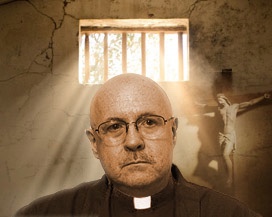
  From time to time I have written about the unjust imprisonment of Father Gordon MacRae.  All endeavors to free him for over 28 years have failed.  He was reconciled to his fate-die in prison.  

A chance has surfaced.  There has been made public a list, known as Laurie List, of crooked cops: 

Officers placed on the list sustained discipline for dishonesty, excessive force, or mental illness in confidential personnel files...if a criminal defendant finds out that such evidence existed, even many years later, he or she later may petition the court for a new trial or try to have the charges dropped altogether.

This discovery is the answer to our prayers.  Let us pray for Father MacRae to be free.  Father Lataste is a good intercessor.  He has worked miracles.  Also, St. Dominic is the patron of the falsely accused.   Dominic works miracles too, especially with the Rosary.


Thursday, August 6, 2020

St. Dominic's Lectio Divina

 Lectio Divina was St. Dominic's eighth way of prayer.  He loved to read and talk to God as he read.  This is my favorite way of praying, also.

Wednesday, August 5, 2020

Crucified with St. Dominic

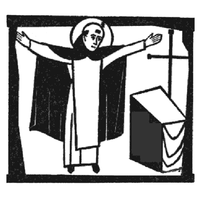
The sixth way of praying for St. Dominic was to spread out his arms as if he was being crucified.  Try it.  How long can you hold your arms up?  I don't know how long Dominic did it, but it was an effective prayer.   

Thursday, July 30, 2020

St. Dominic's Nine Ways of Prayer and Novena

Image courtesy of irishdominicanvocations.blogspot.com
August 8 is the Feast of St. Dominic.  The novena to St. Dominic would start today and since there are nine ways of praying, according to St. Dominic, I thought I'd copy his postures while I pray a novena.

Already I'm stuck.  My parish church isn't open due to COVID-19.  So I can't bow to an altar.  I'll have to bow to a crucifix on the wall.

Tuesday, October 18, 2016

Champions of the Rosary

Champions of the Rosary, the History and Heroes of a Spiritual Weapon by Donald H. Calloway, MIC, is a thorough examination of what makes the Rosary the most beloved prayer of Catholics.  Father Calloway gives new information that most Dominicans probably aren’t familiar with.  The pictures Father adds are beautiful -- 26!    He even had some new ones commissioned just for the publication of this book.  I’m tempted to cut them out to be framed.

My favorite is St. Dominic slaying the dragon:
Let victory be thine, O Mother.  Thou wilt conquer.
Yes, thou hast the power to overcome all heresies,         
errors, and vice.  And, I, confident in your powerful
protection, will engage in the battle, not only 
against flesh and blood, but against the prince     
of darkness, as the Apostle [Paul] says, grasping
the shield of the holy rosary and armed with
the double-edged sword of the divine word.


Champions of the Rosary is the comprehensive book I have ever read on the connection between the Dominicans and the Rosary.  I kept flipping back to the cover of the book to check to see if the author was a Dominican. Father Donald Calloway belongs to the Congregation of Marians Immaculate Conception.  Still, I wonder if he were commissioned by the Order of Preachers to write on the Rosary.  It’s awfully coincidental that this book came out for the Dominican’s 800 Jubilee.  Plus, the publication date was August 8, 2016, (Feast of St. Dominic).  My Dominican senses twitch. 

Praise and thanks be to God for whatever reason Father Calloway was inspired to write Champions of the Rosary.  Every postulant should be given this book to read.  It belongs in every Lay Dominican’s Library.  It is an important, powerful story of our beloved rosary.


Sunday, January 31, 2016

Who Am I Revised

The game I made yesterday, turned out to be a disaster.  My "cloistered brothers" are just not versed enough in hagiography to enjoy the game.  They knew too little.  So instead of the participants just out of the blue guessing "Who Am I?"  We'll read the saint's life.  Then guess who he is.

  This will be read to them.

I was born in 1170. Son of Felix Guzman and Bl. Joan of Aza, he was born at Calaruega, Spain, studied at the Univ. at Palencia, was probably ordained there while pursuing his studies and was appointed canon at Osma in 1199. There he became prior superior of the chapter, which was noted for its strict adherence to the rule of St. Benedict. In 1203 he accompanied Bishop Diego de Avezedo of Osma to Languedoc where we preached against the Albigensians (heresy) and helped reform the Cistercians. I founded an institute for women at Prouille in Albigensian territory in 1206 and attached several preaching friars to it. When papal legate Peter of Castelnan was murdered by the Albigensians in 1208, Pope Innocent III launched a crusade against them headed by Count Simon IV of Montfort which was to continue for the next seven years. I followed the army and preached to the heretics but with no great success. In 1214 I with six followers founded an order devoted to the conversion of the Albigensians; the order was canonically approved by the bishop of Toulouse the following year. I failed to gain approval for his order of preachers at the fourth General Council of the Lateran in 1215 but received Pope Honorius III's approval in the following year, and the Order of Preachers was founded. 

I spent the last years of this life organizing the order, traveling all over Italy, Spain and France preaching and attracting new members and establishing new houses. The new order was phenomenally successful in conversion work as it applied to the concept of harmonizing the intellectual life with popular needs. I convoked the first general council of the order at Bologna in 1220 and died there the following year on August 6, after being forced by illness to return from a preaching tour in Hungary. I was canonized in 1234 and my  Feast day is Aug. 8.  Who am I?

Answer --  I am Saint Dominic

Friday, August 8, 2014

The Monkey's Taunt at Saint Dominic

I've known the legend of the monkey and St. Dominic.  I've even blogged about it here.  But I never heard or read what actually the monkey was saying.  Today, on the Catholic Exchange blog, I read a post by Sean Fitzpatrick which gives the monkey's taunt.  It's amusing.

Dost thou here write when all do sleep?
O vanity of vanity,
To drive men to insanity,
With teachings of inanity–
Far better would it be to sleep!

Dost thou here muse when all do sleep?
O, thou, dim-witted Dominic,
Thou dost neglect the poor and sick,
For thine own liking dost thou pick–
Far better would it be to sleep!


Dost thou here pray when all do sleep?
O scribbling scrabbling Pharisee,
Are thy prayers of such quality
They merit immortality?
Far better would it be to sleep!

I enjoy the part where Dominic tries to ignore the pest.  Isn't that everyone's first reaction?  

Imagine calling Dominic, dim-witted?  Or a Pharisee?  

Sunday, October 20, 2013

Dominic's New Ways of Prayer


Everyone in the Dominican family learns of Dominic's Nine Ways of Prayer: bowing, prostration, self-discipline, genuflecting, oremus position, arms out like a cross, arms straight out, lectio divina, and walking in meditation.  Some of these, like the discipline are out dated.  You would be considered a fanatical sadist if you whipped yourself.  But there are other ways to discipline yourself, through fasting for example.

At Mass this morning I picked out a few ways of praying.  People blessing themselves.  You will see people bless themselves going by a church.  This is to reverence the living Eucharist in the Tabernacle.  People bless themselves before swimming, or going up to bat.  They may be sending up a prayer for protection, a blessing, or thanksgiving.

People still genuflect like Dominic.  We also kneel.  But there are some people who are elderly, too big, or just cannot kneel for a long time, and they rest back on the seat.  It's not quite kneeling; it's not quite sitting.  I'll call it support kneeling.

During the Our Father some people extend their hands to pray the Our Father, reminiscent of the priest's oremus.  Some still hold hands to pray the Our Father.  This also reminds me of people placing their hands on someone in need of prayer and praying for that person.

I also consider the Kiss of Peace prayer.  Kissing is how Christians greet each other.  This is how people know we are Christians.  Early Christians were martyred for this poignant gesture.  Definitely, the Kiss of Peace is prayer.

During Mass we also stand and pray.  We sit to meditate.  We sing, and according to St. Augustine that's praying twice!

We put money in the collection; that's giving alms.

Praying the Rosary is prayer.  There's Lectio Divina, meditation and contemplation.

Come to think of it.  There's something for everybody!  St. Dominic, today, would be amazed.


Friday, October 18, 2013

Pope Francis Reminds Me of St. Dominic

When the Order of Preachers was a gleam in St. Dominic's eye, too many of the clergy were lording it over the people.  They lived a lavish, if not immoral lifestyle.  Hence Dominic made his Order, mendicant.  The Order took a vow of poverty.  St. Dominic was so moved by the hungry beggars, that he sold his books to get food for them.

In reading an interview of a former professor of Pope Francis, Father Juan Carlos Scannone, to Mauro Castagnaro, I read a description of St. Dominic Pope Francis.

Jorge Mario has three great qualities: he is a man of spirituality, and when he was my provincial I had the impression that he ruled based on spiritual discernment, at least with respect to me. He is austere, so that in Buenos Aires he traveled by subway or bus -- and often visited the poor neighborhoods, defending priests who worked there. He is determined, and therefore he will implement the necessary changes in the Church, but without causing a rupture.


Father Scannone continues to state his expectations of Pope Francis.  You can read the interview at the blog Public Vigil.


Thursday, August 8, 2013

Solemnity of Our Holy Father Dominic


On the grounds of Santa Sabina is an orange tree.  St. Dominic brought those seeds and planted them there.  The tree still exists and yields fruit.  So do other trees, made from graftings taken from St. Dominic's tree.  With this in mind, today you must toast, "Veritas!" with your orange juice.  Since it is a celebration for the Feast of St. Dominic, add champagne to your orange juice.


Lord,
   Let the holiness and teaching of our Father Dominic come to the aid of your Church.  May he help us now with his prayers as he once inspired people by his preaching.  We ask this through our Lord Jesus Christ, your Son, who lives and reigns with you and the Holy Spirit, on God, for ever and ever.  Amen

Thursday, May 2, 2013

Crowning Mary

In medieval religious writings, the soul is often described as a garden.  And a rose garden is one of the most beautiful.  Roses are often weaved into a garland and placed on Mary's head.  "Bring flowers of the rarest" is a traditional song for crowning Mary.

O Mary we crown thee with blossoms today!
Queen of the Angels and Queen of the May.
O Mary we crown thee with blossoms today,
Queen of the Angels and Queen of the May.

Many saints had visions of Mary with flowers.  St. Louis de Montfort thinks a garden dedicated to Mary symbolizes the Garden of Eden.  St. Francis tells of a novice who found himself in a room bathed in a heavenly light facing Our Lady with two angels.  Beautiful roses burst from his mouth as he prayed Hail Mary.  And the angels picked them up and made a crown to place on Mary's head.  

Repetition of a single prayer as a background to meditation has been practiced as a centering technique, for a long time.  From the thirteenth century the Rosary has been prayed, ever since Dominic had a vision of Mary, and ever since preached the Rosary for the rest of his life.  Our Lady appeared to Dominic and prayed with him.

Heaven was opened for him to see and the whole heavenly court was assembled in magnificent array.  He heard them sing the rosary in an enchanting melody and each decade was in honor of the life, passion and glory of Our Lord Jesus Christ and His Blessed Mother.  He noticed that whenever they said the sacred name of Mary they bowed their head and at the name of Jesus they genuflected and gave thanks to God for the great good that He had wrought in Heaven and on earth through the Rosary, which the confraternity members say here on earth.  He noticed too that they were praying too for those who practiced this devotion.  He also saw beautiful crowns without number, which were made of gorgeous flowers held in readiness for those who pray the Rosary devoutly.  He learned that by every rosary that people pray, they make a crown for themselves, which they will be able to wear in heaven.

When I read this in Andrea Oliva Florendo's The Liturgy of  Flowers in a Mary Garden, I couldn't help but think of my own poor praying habits.  I certainly hope intention and perseverance earn a crown, because my praying too, too often, isn't prayed very devoutly.  I keep trying.  I'm a saint in the making.

Monday, August 27, 2012

Pre-burial Arrangements

remains St. Monica
In the beginning of this month, just before St. Dominic's Feast on Aug. 8, I was deploring the fact that St. Dominic's last wishes weren't adhered to.  Good grief!  The thought that the minute one's back is turned (so to speak), people do what they want.  It's very disconcerting.  Poor St. Dominic, who only wanted to be buried in ground under the feet of his brothers, was placed in such an elaborate tomb, that it's called an Ark!  And it took five centuries to build!

I thought of this when I read the Office of Readings for the Memorial of St. Monica.  Similar to St. Dominic, Monica said, "Bury my body wherever you will; let not care of it cause you any concern..." * I don't know what her children did with her body but I'm sure it wasn't placed in the casket, in the picture above, and placed in a local cemetery.

Why do we have pre-burial arrangements?  Paying for cremations, burials at sea, shipping remains back to the old country, pre-burial insurance...  Forget about it.

Concentrate on getting your soul to heaven.   "Remember man that you are dust, and to dust you will return."  **

* Confessions, Augustine
** cf Gn. 3:19

Wednesday, August 8, 2012

What God told Kit

God revealed to St. Catherine of Siena, "Your Father (St. Dominic) was a light that I gave to the world by means of Mary, and He does not wish His sons to apply themselves to anything but remaining at the table of the Cross to seek with the light of Science the glory and praise of My Name alone and the the salvation of souls.

Tuesday, August 7, 2012

The Second Pentecost

Having just come from a pilgrimage to the Beatification of Pere Lataste, I know what it means to travel with people who have taken a vow of poverty.  So I felt like one of Dominic's followers, sent forth without any Euros, car, or cell phone.  It was an experience; a wonderful experience.  God is good.

On the feast of Our Lady's Assumption, 1217, St. Dominic, in his burning zeal for the spread of Truth, sent his sixteen followers on their missions in the same manner as the Apostles, without wallet and on foot.  Saints Peter and Paul had previously appeared to St. Dominic in a vision with the command to go and preach, "for unto this has God chosen thee."  Some have referred to this dispersion of the brethren as a second Pentecost.

From Pope Honorius III to Saint Dominic on December 22, 1216:

We considering that the brethren of your Order will be the champions of the faith and true lights of the world, do confirm the Order in all its lands and possessions, present and to come, and we take the Order itself, with all its goods and rights under our protection and government.

h/t Devotions to Saint Dominic, compiled by Rev. Bertrand Wilberforce, O.P.

Monday, August 6, 2012

The Arc of St. Dominic

Yesterday, I intended to post about the tomb of St. Dominic, but I was too busy. This morning, I awoke very early (3:36 AM) and couldn't get back to sleep.

After my Morning Prayer, I decided to post.  First, I googled "Arc of St. Dominic."  It is also called the Tomb of St. Dominic.  Wikipedia's article was very interesting.

Yesterday, I would have just told you about the Ark, but today I can embellish.

When St. Dominic died, people wanted to dress the corpse in fine silks and talked of elaborate head stones.  But the friars insisted that Dominic's wishes be adhered to, i.e., bury him under the feet of his brethren.

And so Dominic's body was placed in a simple wooden coffin and put in the ground.  But in 1267, a beautiful tomb, so large that it was called an "Ark," was begun.  The Ark was added to by various artists over the centuries, so that it wasn't completed until 1768.  You can visit and see it in the Basilica of San Domenico in Bologna, Italy. 


The sarcophagus

The sarcophagus is the middle part and also the oldest part of the shrine. It contains the remains of Saint Dominic in a cypress coffin, with the exception of his head (which is preserved in the reliquary at the back of the monument). Nicola Pisano, already famous for his pulpit in the Pisa Baptistery, was asked in 1264 to construct this sarcophagus. He was certainly responsible for the design, but left the brunt of the work to his workshop, since in 1265 he was already at work on a new commission (the pulpit for the Siena Cathedral).
The front side was done in his workshop, partially by Nicola Pisano himself but mostly by his assistant Lapo di Ricevuto. and another famous sculptorArnolfo di Cambio. The Dominican brother fra Guglielmo da Pisa (who also designed in 1270 a pulpit in San Giovanni Fuorcivitas in Pistoia) made a small contribution. According to Gnudi (see ref.) an anonymous Fifth Master was also involved. A collaboration of several sculptors on a such a large commission was normal practice in medieval sculpture.
"St. Dominic resurrects the young Napoleone Orsini" (detail).
The sarcophagus recounts the life and miracles of Saint Dominic in a series of six carved panels. The compositions are neatly filled with figures in organized rows, giving a single approach to space. The sarcophagus is flanked on each corner by statues in high-relief of the Four Doctors of the Church.
The scenes are arranged in following sequence from left to right and counterclockwise:
  • On the left corner stands Paul the Apostle.
  • St. Dominic resurrects the young Napoleone Orsini, after a fatal fall from his horse. The expressive face of Saint Dominic, so different from the blander faces in this front panel, is attributed to Arnolfo di Cambio.
  • In the middle: a high-relief of A Virgin and Child.
  • The Miracle of the Book rejected by Fire, acting out a story of Dominic’s preaching in Fanjeaux, southern France, against the Albigensian heresy.
  • on the right corner St. Dominic with the Book and the Scourge.
  • The Angels bring Bread to the Friars thanks to Dominic’s Intercession, representing one of the first miracles of the saint.
  • The back of the tomb gives two scenes (each with three episodes), divided by a statue of Christ the Redeemer.
    • On the left a scene of the life of Blessed Reginald of Orléans, founder of the monastery in Bologna; the Blessed promises St Dominic to enter the Order; the Blessed falls ill; the Virgin heals him and gives him the habit of the Preaching Friars
    • on the right: St. Dominic asks pope Innocent III to approve the Order; the pope dreams of the Saint supporting the basilica of the Lateran; the pope approves the foundation of the Order.
  • In the corner on the right: a high-relief of St. Augustine, author of the Dominican Rule.
  • The last relief gives two more episodes: The Apostles Peter and Paul appear to Saint Dominic, while he was praying in the basilica of St. Peter, and give him the staff and the Book (symbols of the Apostolic mission); the Saint sends his followers out on their mission to preach in the world.
Work on the sarcophagus was finished in 1267. This sarcophagus, originally with its caryatid supports, was taken as model for other tombs: the shrine of St Peter Martyr in the basilica of San Eustorgio in Milan, the shrine of St Luke (1316) in the basilica of San Giustina in Padua and the tomb of Beato Bertrando (c. 1334-1350) in Udine.

The crowning

The elaborate spire.
The ambitious addition of a crowning to the sarcophagus was commissioned in 1469 to Niccolò da Bari to complete this funeral monument. Work at this elaborate spire continued till 1473. But it is not clear why Niccolò did not complete his contract, even if he did continue intermittently at it until his death.in 1494.
On top of a candelabrum, rising from the cyma, stands the impressive statue of the Eternal Father. The candelabrum is held by two putti, symbols of the sky, and four dolphins, symbols of the sea, all covered with festoons with fruit, symbols of the earth.
On the cornice at its base is in the middle a small Pietà, flanked by two winged angels (the Angel of the Annunciation and the Angel of the Passion), while on the four corners stand the four Evangelists in oriental robes. The lower part of the cyma is surrounded by several free-standing figures, the Patron Saints of Bologna: Saint Francis of Assisi, San Petronio (began by Niccolò but finished by young Michelangelo in 1494), Saint Dominic andSaint Florian. On the back stand the statues St Anne, St John the Baptist (sculpted by Girolamo Cortellini in 1539), San Vitale and San Procolo (Michelangelo, 1494 – the resemblance and the posture of this statue shows that he had already his "David" in mind at that time).
San Proculo (by Michelangelo).
Niccolò also added the delicate Candlestick-holding Angel on the left side of the altar slab, below the sarcophagus, while the one on the right side with its youthful strength is by Michelangelo. Michelangelo was paid thirty ducats by his patron Francesco Aldovrandi.
Because of the admiration he received for this splendid masterpiece, he was renamed Niccolò dell'Arca. Art critics perceive in this masterpiece a blend of influences: Burgundian, Florentine and non-Tuscan (such as details in clothing). The way these statuettes express their emotions and the patterns in their dresses and hair evoke the style of Jacopo della Quercia

[edit]The step

The step, between the sarcophagus and the altar slab, was the third addition to the monument. It was sculpted in 1532 by Alfonso Lombardi (1497–1547). Again it depicts a number of episodes form the life of Saint Dominic.
  • front: (left) St Dominic’s birth; the young Dominic sleeping on the floor as a penance; Saint Dominic shows his charity by selling his valuable hand-glossed parchments to help the poor (while he was studying in Palencia)
  • front (middle part) The Adoration of the Magi (with the inscription: Alphonsus de Lombardis Ferraniensis F(ecit))
  • front (right) The Saint is taken to Heaven on a ladder supported by Christ and the Virgin.

[edit]The altar

The marble altar was the last addition to the Arca. It was designed by Mauro Tesi (1730–1766) and later built by Alessandro Salviolini in 1768. On the altar slab stand the two statuettes of the angels holding a candlestick; on the left by Niccolò dell'Arca, on the right by Michelangelo.
The reliquary.
The frontal was sculpted in G. Battista Boudard's workshop in Parma in 1768. It represents St. Dominic's Burial, as designed by Carlo Bianconi (1732–1802).

[edit]The reliquary

Behind the altar, under the sarcophagus is a small chapel, protected by a bronze grill, containing the precious reliquary with the head of Saint Dominic. This masterpiece of gold and silver is the work of the goldsmith Jacopo Roseto da Bologna (1383). Its octagonal base is adorned with elaborate enamelled panels, related to events in the life of the saint. The shaft consists of three levels. It stands in the middle of a circle with winged angels. The shaft supports an octagonal temple, containing the head. It is adorned with Gothic windows and small statuettes in niches. The silver bust of the Saint crowns the whole, but it was added in a later stage.


Tuesday, July 31, 2012

Preparing for St. Dominic's Feast Day


Happy Feast of St. Dominic!  August 8th.   Aren’t we blessed to be Catholics?  Not only do we celebrate special holy days, like St. Dominic’s, but every Sunday, when we attend a liturgical celebration of the Eucharist.
To help put you into a celebratory mood, let’s see what you’re going to do on August 8th.

Dominic is our inspiration and role model.  Which aspect of Dominic is closest to you, and what prayers appeal to you?

  1.  What picture of Dominic do you like best?
a.       Holding Lily
b.      Studying
c.       Walking
d.      Receiving Rosary

  1.  When do you pray for Dominic’s intercession?
a.       Before giving Talks
b.      Before explaining the church’s position
c.       When in doubt
d.      Before Bible Study

  1.  My favorite story about Dominic is
a.       Converting the inn keeper
b.      Selling his books
c.       Meeting St. Francis
d.      Seeing the Blessed Mother

  1.  Excepting Dominic, who is your favorite Dominic saint
a.       Pius V
b.      Thomas Aquinas
c.       Martin de Pores
d.      Catherine of Siena

  1. My favorite Dominican prayer
a.       Litany of St. Dominic
b.      Dominican Litany of Saints
c.       Rosary
d.      Salve Regina

If you chose mostly (a), you feel the most comfortable with Dominic as Master.  You identify with authority, and are a loyal and faithful Dominican.  Spend August 8th enjoying a lecture http://www.ordopraedicatorum.org/preaching/video/

(b) You identify with Dominic’s combining the intellect with the spiritual.  You love to read theology and argue.  You are a born Dominican.  Spend August 8th at the library.

(c) You identify with Dominic’s preaching love and concern: “What will happen to the sinners?”  Dominic was a gentle, compassionate soul and you love him for this.  Celebrate St. Dominic’s feast by visiting those in prison, or read about our newly beatified, Pere Lataste, who was a true son of Dominic: http://www.3op.org/eLumenate_Spring_2012.pdf

(d)  You like Dominic’s contemplative and mystical side.  You find Lectio Divina easy.  St. Dominic is a strong intercessor for you.  Spend some time with Jesus on St. Dominic’s Day, and go to Adoration. 

Thursday, June 21, 2012

Pilgrimage - Day Seven

St. Dominic & Faith

'Till death do us part
View from my room.

Cross in my room.
This day, June 6, 2012 is a blur.  The night seemed endless.  I tossed and turned all night.  The room is very nice, quiet, and the view--spectacular!  But I was so tired and groggy all day, I stuck around the hotel and just became acclimated to the place.  This statue is near their reception desk.  I napped here and there, all day.  I did my laundry in their laundry room.   There's a washer but no dryer.  So my underwear is hanging all over my room. I attended Lauds, Terce, Sext, Evening Prayer, and Compline.  I also found the Adoration Chapel and spent time with Jesus.  These Dominican Sisters of Bethany are contemplatives and have Adoration 24/7.

Tree Trunk Tabernacle

Adoration
 I read a lot.  My room has a little book that explains the hotel, St. Niklausen, and the sisters.  Here are some quotes:

St. Dominic wanted his fellow brethren to study, to preach, to live in community, to be themselves living symbols of God's mercy, and to be sensitive to any kind of poverty diminishing man's humanity.


The Dominican Sisters of Bethanien are rooted in the tender mercy of God.  The Eucharist and liturgical prayer, contemplation and adoration, are the very core of their lives.


Bethanien is a place where differences of origin, social standing, education, or abilities, are regarded as irrelevant.  What counts for us is simply to say "YES" to one another.


Father Lataste - Founder of our Community
In 1864, a young Dominican priest was giving a retreat in a women's prison.  As a result of his preaching, 400 imprisoned women discovered God's tenderness which offers new chances to anyone at all times. 
    Praying before Jesus, Bread of Life, the inspiration to create a new community came to Father Lataste -- a community of forgiveness, adoration and sisterly love.

Mary Magdalene --  Patroness of our Congregation
Do you believe that God loved Mary Magdalene less because she had sinned?   Father Lataste


Mary Magdalene --  Witness to the Resurrection of Christ


She believed in love.  Touched by Christ's compassion she discarded her dark past and focused her passionate love on Jesus, her Liberator.


Not Ship-Shape

  The Woman in Cabin 10 b y Ruth Ware is called a psychological thriller.  To me it means that the protagonist, Lauren, will drive you crazy...