Search This Blog

Showing posts with label Cardinal Sean O'Malley. Show all posts

Sunday, September 11, 2022

What Kind of Shepherd Ignores His Sheep?

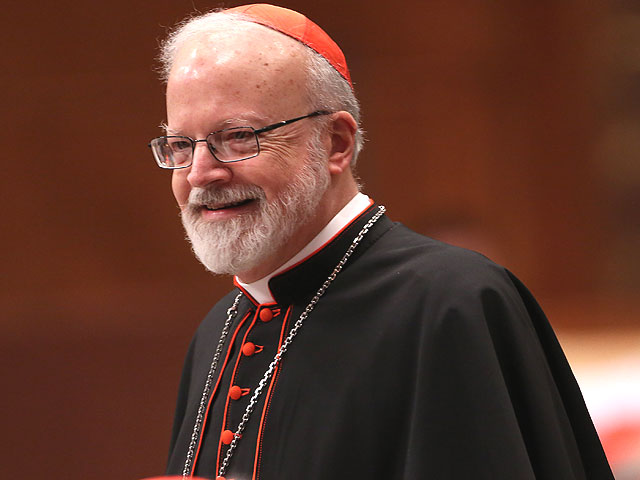
 Today I confronted Cardinal Sean Patrick O'Malley.  I've been waiting over a year to do this.  I'm referring to the letter I wrote to the Cardinal.  I wrote one to the pope, too.  I also wrote one to Bishop Robert Reed, but I haven't had a chance to ask him about it.

Anyway, the letter (refer to the link in the above paragraph) asked Cardinal O'Malley to support the canonization of Father Jean-Joseph Lataste.


Today, I had the opportunity to confront the cardinal.  I went to Mass at Fatima Shrine in Holliston, MA.  The priests who minister at the shrine, the Xaverians were celebrating their 75 years of ministry in the USA and asked the Cardinal to come celebrate the Mass.

I was blessed to be the Lector at the Mass.

After Mass, there was a collation.  My friend had a medal that she was hoping to have blessed by the cardinal.  I asked her if I could ask him to bless it.  She agreed.  

I asked his eminence to bless the medal.  Then!  I commented on his homily on the Good Shepherd, Luke 15: 1-7, by asking "What kind of shepherd ignores his sheep?"  I continued by telling him that I sent him a letter in January, 2021 and never received an answer.  It was asking his support for the canonization of Father Jean-Joseph Lataste.  The Cardinal responded by saying that he knows nothing about it.  I finished by saying that his secretaries should at least send form letters out to people who write to him acknowledging receipt of their letters.  He said, "Thank you for telling me."

I pray he does have his secretaries acknowledge ALL letters.  After all, what kind of shepherd ignores his sheep?

Saturday, September 26, 2020

Cardinal Sean Patrick's Letter to the People in Massachusetts


 I want to begin this week sharing with a statement I issued earlier today on efforts to advance the proposed ROE Act here in the Commonwealth:

Our country and our Commonwealth are faced these days with multiple issues that are both empirically complex and profoundly moral in their content and consequences.  These issues include the COVID-19 pandemic, racial justice, climate change, poverty and inequality.  The Catholic Church, in its teaching and social ministries, is engaged with many other organizations in addressing these questions, and we will continue to do so.

In this statement, however, I wish once again, as I have done in the past year, to raise up for attention a uniquely significant moral question: the issue of abortion.  It is uniquely significant because it always involves the right to life, the fundamental human right, which is the foundation of the other spiritual and material rights that comprise the common good of our society. Abortion always terminates a human life.

The right to life of the unborn is deeply threatened by legislation presently being considered in the Massachusetts legislature. The ROE Act is now being debated in the Joint Committee on the Judiciary. Advocates for this bill describe its purpose as protecting the status and legacy of the Roe v. Wade decision of the U.S. Supreme Court in 1973. As a matter of law, Massachusetts already has among the most extreme abortion laws in the county, and if Roe v. Wade were overturned, abortion rights in Massachusetts would be unaffected. Here in Massachusetts, the proponents of the ROE Act describe its objective as increasing access to abortion. Tragically, the bill would do this but in a very extreme manner.

Specifically, the ROE Act would do the following; it would:

· Allow abortion in Massachusetts during all nine months of pregnancy;

· Eliminate any requirement that even late-term abortions be performed in hospitals;

  • Eliminate the requirement to make efforts to care for a child who survives an attempted abortion;
  • Eliminate any requirement that a pregnant minor (under 18) have any adult consent (parental or through the courts) before undergoing an abortion.

The proposed legislation can reasonably be described as radical in its nature and destructive in its consequences. It is being pressed forward as if it were necessary in a state with some of the most expansive abortion laws in the country. By any rational measure, the specifics of the Act cited above are extreme measures in a state already known as widely pro-choice.  I regret that fact, but it is a fact.

For almost 50 years, abortion has divided this nation morally, legally and politically. Again, I regret these divisions, but it is not possible to remain silent as this legislation is being pressed upon this Commonwealth. Opposition to the Act is required on moral grounds, indeed on basic human rights grounds.

Our opposition to the ROE Act is not designed to condemn, shame or single out individuals. The complex conditions which often bring women to undergo an abortion should be acknowledged and recognized. In the face of these situations, the appropriate attitude should be compassion and care. In the Archdiocese, we attempt to offer both through Pregnancy Help and the Project Rachel program. Our deepest concern is to provide help and support to women.

The Church must oppose the ROE Act, and I invite others to consider why we do so. We will publicize our objections in the parishes of the Archdiocese, seeking the support of members of our community. We will continue to explain our views to legislators and urge citizens to express their opposition to their representatives and senators. We will dialogue with our neighbors who may differ with the Church’s position and will do so with care and civility. In the end, we are simply committed to protecting human life in its most vulnerable condition.

Saturday, May 30, 2020

Our Sean Patrick Writes to You

Many churches are opening tomorrow.  Our Cardinal Archbishop, Sean Patrick O'Malley has written a letter for all the faithful.

May 26, 2020
Letter to the Faithful
So much of modern life has been upended by the pandemic. Social distancing keeps us from the routine contact that we took for granted for a lifetime. But the pandemic has had an almost opposite effect on family life. Modern families have, up until now, developed social distancing into an art form.
A generation ago, the typical American middle-class family had their own home. Often, there were many children, but one automobile, one telephone, one television set and one or two bathrooms. Family life was about being together and sharing. Meals were a family affair. Children even came home from school for lunch.
The evening meal was a time when the whole family gathered to enjoy a good home-made meal and to bond with each other through all the back-and-forth that took place at the dinner table. The modern family, often a one-parent family, is pulled in a thousand directions by different work schedules, extracurricular activities, organized athletics, addiction to social media and many other aspects of modern life that promote isolation and individualism.
Enter the pandemic, and suddenly being part of a family is like living in a treehouse on Treasure Island. It is a challenge and an opportunity. It can be a time for us to reconnect with our families, to get to know each other better, to overcome our innate selfishness and learn how to give, how to forgive and how to be part of a community.
One of the documents of the Second Vatican Council, “Lumen Gentium,” describes the family as the domestic Church. Pope John Paul II often spoke about the family as the domestic Church. He outlines the four tasks that each family should strive to accomplish: 1) Forming a community of persons, 2) Serving life, 3) Participating in the development of society, and 4) Sharing in the life and mission of the Church.
I know this can all sound kind of daunting when discussions over who is going to wash the dishes and empty the garbage can take center stage. The lofty goals of the Christian family can be achieved only where the family is a school of love and a sanctuary of life. For many people, the stay-at-home order was an invitation to rebuild family life.
Suddenly, many parents who used to struggle to get their children dressed and ready for school each day have morphed from school bus driver to teacher, counselor and recreation director. Parents who were so often critical of teachers, coaches and school personnel have discovered how short their child’s attention span can be. The helicopter has crashed.
One of the challenges of working and studying remotely is to avoid treating every day like a Saturday. We need the discipline to map out a schedule that will allow us to have a productive and satisfying day. Hopefully, families will be able to recoup the meal as a time for conversation and sharing without the intrusion of television and smartphones.
Children need to understand that the inconveniences of social distancing are an expression of a desire to protect the vulnerable. Love is always about making sacrifices for others.
Just as parents are thrust into a new role of teaching mathematics, earth science and social studies, I hope the parents will now embrace their role as the chief catechist for their children. I am always edified that our Catholic people, even those who are not great churchgoers, still have a desire for their children to receive religious education. Parents are content to entrust the religious formation of their children to the parish catechist.
We all owe a great debt of gratitude to the parish staff and volunteers who dedicate so many hours to preparing and imparting classes on the faith. Passing on the faith to new generations is one of the primary responsibilities of every parish community. But the pandemic brings home to us that religious education is primarily the responsibility of the family.
Social distancing makes it difficult to give our young people the religious formation that we all want them to have. At the same time, this is an opportunity for parents to exercise their special role in passing on the faith to their children. Although it is not something we do spontaneously, we need to learn to talk about our faith, to share our ideals and to pray together. Religious formation is not just about imparting information; it is about molding people’s hearts, helping them to have a relationship with Jesus Christ and to embrace a life of discipleship in a community of faith. Our religious formation is to help us to discover how much God loves us, who we are, why we are here, and what is our mission and purpose. An important part of discipleship is discovering our own vocation, the special way that God is calling us to live a life of service, to make a gift of ourselves and to share the treasure of faith with those around us, to build a civilization of love rather than greed.
This week, the Catholic Church is reliving liturgically that first novena: the nine days between Ascension Thursday and Pentecost Sunday, when the Apostles with the Blessed Virgin and the disciples were sequestered in the Cenacle. It was an exercise in social distancing because of the fear of persecution, but it was also a very powerful experience of shared prayer that prepared the community of faith for the transformation of Pentecost with the outpouring of the Holy Spirit.
I hope that the experience of being thrown together will not be wasted on our families, but rather that it will be a time of intense experience of community and solidarity, renewal in prayer and a deep sense of identity. May our days locked in the Cenacle help us to emerge as stronger, faith-filled disciples ready to embrace our mission to carry on the work of Christ in the world.
In the history of salvation, the great plagues of Egypt were a preface for the liberation of God’s people. I hope that this modern plague will lead to our liberation from a culture of death into a Promised Land of people ready to make sacrifices for each other and who are deeply aware of how much we need God and one another. Social distancing can teach us that we are meant to be part of something bigger than ourselves.
When Pope Francis went to Lampedusa shortly after his election as Pope, he called on everyone to overcome the globalization of indifference, to be a people who care about people, not just about money and having fun. The text that the Holy Father used was from Genesis, where God asked Cain: “Where is your brother?” Cain answers God: “I do not know. Am I my brother’s keeper?” The pandemic has forced us to stop pretending that we are not connected, that we have no responsibility for the suffering of others and that, somehow, we can make our own life and happiness without reference to the rest of humanity.
Pope Francis, in his encyclical “Laudato Si,” refers to this planet as our common home; it is more than just a metaphor. If you live in the penthouse suite of a 30-story apartment building, and there are several apartments on the first, second and third floors that are in flames, you cannot be nonchalant about the situation. The Gospel of Life in the Church’s social doctrine is a treasure trove of wisdom that can help us to find paths forward for humanity crippled by individualism, materialism and greed.
The temptation in a time of pandemic is to seek an anesthetizing distraction and entertainment rather than taking the time to examine the meaning of this pandemic and its repercussions for the future. Typically, it is only when we lose something or someone we care about, that it dawns on us how important that person, experience or treasured possession was for us. Watching them slip away and disappear from life is often a rebuke for having taken them for granted.
When I was growing up, the Church observed a very strict Communion fast. We could not eat or drink anything — not even water — from midnight before we were going to receive Holy Communion. In the Catholic school that I attended, there were covers placed over the water fountains to remind people not to break the fast. Some people were afraid to brush their teeth in the morning for fear that they might swallow a little water and thereby be ineligible to receive the Eucharist.
At one point, the Holy Father changed the discipline so that water would never break the fast, and later, the fast was changed to three hours before receiving Communion. More recently, Pope Paul VI further mitigated the fast to one hour before receiving Communion. I presume many people are unaware of the fast because it has been reduced to such a short period.
The practice of the Communion fast dates back to the 4th century and, indeed, St. Augustine claimed that it went back to the time of the Apostles. The motivation for the Communion fast was always presented as being out of respect for the Lord’s Body and Blood. St. Thomas Aquinas said that the fast responded to the Lord’s injunction, “Seek first the kingdom of God.” Some spiritual writers suggested that the pre-Communion fast was a way of ritualizing the spiritual hunger that should characterize all those who gather at the Eucharistic table.
The pandemic has brought a new kind of Eucharistic fast to our Church, which has made it difficult for many of the faithful to receive the Sacrament. We can only hope that this forced Communion fast might result in a deeper hunger for the reception of Holy Communion.
Being a disciple of Jesus is always about being part of a community — the community that gathers around the Eucharist. May we never take this great gift for granted. In the Eucharist, Jesus makes a gift of Himself to us. At the first Mass, Jesus made it very clear that the Eucharist is the key to understanding discipleship. Jesus gives us the gift of Himself and urges us to wash each other’s feet and to love each other the way he loves us, to the point of making a gift of ourselves.
Some of our brothers and sisters are in solitary confinement. Our consolation is that we are never really alone in the Body of Christ. Cardinal Van Thuan spent 13 years in a communist prison, nine years in solitary confinement. He documents his experience in the powerful book: “The Road to Hope.” In the midst of the isolation of the pandemic, we must find hope in Jesus Christ’s promise that he would be with us always. Social distancing cannot destroy the spiritual accompaniment that is born at the moment of our Baptism and connects us to the Lord and our brothers and sisters in the faith.
May social distancing make us more aware of our vocation to community and solidarity; may our forced fasting from Holy Communion augment our hunger for the Bread of Life; may all our homes be like the Cenacle where the disciples were united with Mary in prayer waiting for Pentecost. May our experience of staying at home be not so much a house arrest but a retreat that will allow us to experience the peace and love, simplicity and hospitality of the Holy Family at Nazareth.

Saturday, December 14, 2019

Year of the Eucharist

Announcing the Year of Eucharist

Hello and welcome!
Earlier this week, we announced that beginning on Holy Thursday of next year and running through Corpus Christi 2021, we will be observing a Year of the Eucharist in the Archdiocese of Boston.
I want to share with you the letter that I issued with the announcement this week:
December 10, 2019
Feast of Our Lady of Loreto
Friends,
A recent Pew Study entitled “What Americans Know About Religion” reported that only 31 percent of Catholics believe that the bread and the wine consecrated during the Mass actually become the body and blood of Jesus, and that only half of Catholics know of the Church’s teaching concerning the Real Presence of Jesus in the Eucharist.
In order to help people gain a better understanding of the Eucharist, on Holy Thursday 2020, the Archdiocese of Boston will begin a Year of the Eucharist. It is my hope and prayer that through this spiritual initiative we can invite and encourage our brothers and sisters to find the consolation of the Lord through participation in the celebration of the Eucharist and in times of prayer before the Blessed Sacrament.YearOfTheEucharistLogo
When my parents were married, my uncle Father Jerry Reidy gave them as a wedding gift Leonardo Da Vinci’s iconic painting of the Last Supper. That painting hung in our dining room, and one of my earliest memories was my parents explaining to us that this painting depicted the first Mass, the first Eucharist. They made clear that is the reason we go to Mass, to partake in the same Eucharist that Christ shared with his closest followers at the Last Supper before he would suffer and die for us.
My mother and father held the evening meal as a priority for our family; attendance was not optional. It was an institution in our house to gather around the table and it was there that we bonded with one another. We shared our experiences of the day. We would laugh together, would even argue with each other. The evening family meal was essential to our formation and it was where we discovered our identity.
The same can be said of the celebration of the Eucharist. As Catholics, it is in the Eucharist that we learn our identity. At the table of the Lord, Jesus makes a gift of Himself to us because God loves us so much. Just as we discover our identity at the family table, it is in the Eucharist that we discover who we are, why we are here, and what is our mission as disciples of Christ.
Growing up I remember many wonderful devotions that kept the Eucharist at the center of our lives as Catholics: the Forty Hours Adoration, Corpus Christi processions, and the Mass of the Lord’s Supper on Holy Thursday. From an early age I knew the Eucharist is what distinguishes us from most other Christian churches, that the Body and Blood of Christ was actually, sacramentally, present in our Church.
At the Last Supper, Christ gave us the priesthood so He could be present everywhere in the world, not just in Jerusalem, in every time and age. Through the Eucharist, we have direct contact with the Lord at the celebration of Mass and in prayer before the Blessed Sacrament. When we visit our churches at times other than the celebration of Mass, we can see the red glow of the sanctuary lamp and know that Jesus is there for us. He is always waiting silently and lovingly, ready to receive us and console us.
The Capuchin Friars have a commitment to make two periods of meditation a day and I always do mine in the presence of the Blessed Sacrament. For me, as Archbishop of Boston, my holy hour is late at night when the phones stop ringing. It is a time when I am renewed by the assurance of the Lord’s presence and His love for me, knowing He will guide me and give me the strength I need. Praying in the presence of the Eucharist, in adoration of the Lord, is a very important part of my daily existence; it is essential to perseverance in the vocation I have embraced.
Before I became a bishop, I served as a priest in Spanish and Portuguese ministry where I learned many of the hymns I sing to the Eucharistic Lord during my Holy Hour. I also love the Latin hymns I learned in the seminary, the “Pange Lingua,” and the English hymn, “Jesus, My Lord, My God, My All.” I memorized these hymns, and it is my hope that they can become a regular part of devotional practice at all our parishes, hymns that everyone learns by heart and sings together. As St. Augustine told us, singing is praying twice, because singing lifts our hearts to God and provides us with a glimpse of His beauty in the beauty of the music.
Recent times have been very difficult for the Church and her people. In the Year of the Eucharist, we all have the opportunity to renew and strengthen our faith and our closeness to the Lord. If we center ourselves in the Real Presence of Jesus, in His friendship, then everything else will make sense. At the celebration of Mass, Jesus is there, waiting for us, inviting us to the table where He is making a gift of Himself to us so that we may have the strength to make a gift of ourselves to others. That is what human fulfillment is about. It is about love and giving of ourselves on behalf of others. That is the meaning of the Eucharist, it is love taken to the extreme. The more we understand that, the more we will want to be present to the Eucharist and the more the Eucharist will transform us.
Discipleship is not a solo flight. Jesus sent people out two by two, not one by one, and spoke of the importance of “two or three are gathered in my name.” The Eucharist is where we gather as Christ’s family, where we can witness our faith to one another and grow in our capacity to love. The Eucharist gives us the strength to carry out our mission to transform the world, to work for justice, to serve the poor, to bring healing and reconciliation. But we can’t do these things unless we have the strength that comes from the intimate contact with God’s love that is given to us in the Eucharist.
Discipleship also requires a plan. We need to ask ourselves what we can do, individually and with our families and friends, to prepare for the Year of the Eucharist. We can find the answer to these questions in times of prayer before the Blessed Sacrament in our churches. We can read and reflect on the sixth chapter of the Gospel of John. We can invite family, friends, and colleagues to join us at Mass and times of Adoration. We can reflect on the importance of receiving the Lord in the Eucharist, the difference that makes in our lives, and share that insight with those who are close to us.
We don’t exist by accident. Our lives are a gift of God’s gratuitous love, and the Eucharist is the most profound symbol of His love for us. Jesus comes to us in humility, in littleness, so that no one need be afraid or unsure of His acceptance. He makes Himself present to us so that we can have the strength we need to live our mission in the Church as disciples of Christ.
God created us and entered into creation in Jesus Christ so we could be close to Him, hear Him, know and love Him. The sacraments not only touch our lives, they mold our very being, and the Eucharist is the center of our sacramental life. That is why I am a Catholic. That is why I am a priest. Without the Eucharist, I would ask myself, “Is it worth it?” I know it is worth it, because Christ really is present in the Eucharist. May God bless you all abundantly with this assurance that Jesus will be with us always, even to the end of time. That is Jesus’ promise and He keeps that promise in the gift of the Eucharist.
With the assurance of my prayers for you and all whom you hold dear, I am,
Sincerely yours in Christ,
Cardinal Seán P. O’Malley, O.F.M., Cap
Archbishop of Boston

Friday, October 24, 2014

Push for Faith

I was reading Cardinal Sean O'Malley's blog and read where there's an initiative by USSB, the Seventh Day Adventist, Jews, Mormons, Sikhs, and the Partnership for the First Amendment, to get youth to think about the importance of having faith.  Naturally, I'm on board.  I think it's the only thing that makes sense out of life.  Otherwise, why are we here?

It's called Faith Counts.  They have a Facebook page, and a newsletter you can sign up to receive.  Young people who are recognizable, post about their faith.

Let's pray that this initiative helps our young.  Spread the word.

Tuesday, October 2, 2012

Questions for Cardinal Sean Patrick


Massachusetts has a vote in November, known as Death with Dignity.  It's an attempt to push an agenda, that is really not at all about health care, or patients' needs; it's about a physician assisting someone to kill themself.  Physicians need this vote to pass a law so they won't be sued.  It's about insurance, not health care.
To explain the stance of the Catholic Church, our Cardinal Archbishop, Sean Patrick O'Malley is hosting a "town-hall" like meeting.  This will be re-broadcast many times.  
Besides prayers, Catholic TV is requesting people to send in questions.  Use Facebook, Twitter, the station and email
    townhall@catholictv.com
   
Rebroadcast times on CatholicTV 
Oct. 4 at 2 p.m.; Oct. 4 at 9 p.m.; 
Oct. 5 at 12:30 a.m.; 
Oct. 7 at 2 a.m.; 
Oct. 8 at 9 p.m.; 
Oct. 13 at 4:30 p.m.; 
Oct. 15 at 8 p.m.;
Oct. 20 at 4:30 p.m.;
Oct. 22 at 8 p.m.; 
Oct. 29 at 10:30 p.m.; 
Oct. 31 at 7:30 a.m.; 
Nov. 2 at 2 p.m.; 
Nov. 3 at 3:30 a.m.; 
Nov. 5 at 8 p.m.; 
Nov. 6 at 6 a.m.  and noon.
Visit iCatholic at: http://icatholic.catholictv.com/?xg_source=msg_mes_network

Wednesday, February 1, 2012

Our Cardinal Archbishop's Letter

Here is Cardinal O'Malley's letter:
My Dear Brothers and Sisters in Christ,

Allow me this opportunity to share with you important information concerning an alarming and serious matter that negatively impacts the Church in the United States directly, and that strikes at the fundamental right to religious liberty for all citizens of any faith. The federal government, which claims to be “of, by, and for the people,” has just dealt a heavy blow to almost a quarter of those people—the Catholic population—and to the millions more who are served by the Catholic faithful.

The U.S. Department of Health and Human Services (HHS) announced last week that almost all employers, including Catholic employers, will be forced to offer their employees’ health coverage that includes sterilization, abortion-inducing drugs, and contraception. Almost all health insurers will be forced to include those “services” in the health policies they write. And almost all individuals will be forced to buy that coverage as a part of their policies. The Church has had to struggle against regulations like those now proposed by HHS in several states. This HHS ruling would expand and intensify a situation which is already very harmful.

In its ruling, the Administration has cast aside the First Amendment to the Constitution of the United States, denying to Catholics our Nation’s first and most fundamental freedom, that of religious liberty. And as a result, unless the rule is overturned, we Catholics will be compelled and must be prepared either to violate our consciences, or to drop health coverage for our employees (and suffer the penalties for doing so). The administration’s sole concession was to give our institutions one year to comply.

We cannot simply accept this unjust law now proposed at the federal level. People of faith cannot be made second class citizens. We are already joined by our brothers and sisters of all faiths and many others of good will in this important effort to regain our religious freedom. Our parents and grandparents did not come to these shores to help build America’s cities and towns, its infrastructure and institutions, its enterprise and culture, only to have their posterity stripped of their God given rights. In generations past, the Church has always been able to count on the faithful to stand up and protect her sacred rights and duties. I trust she can count on this generation of Catholics to do the same. Our children and grandchildren deserve nothing less.

In order that we make every effort to respond to this proposed restriction on religious liberty I would ask of you two things. First, as a community of faith we must commit ourselves to prayer and fasting that wisdom and justice may prevail, and religious liberty may be restored. Without God, we can do nothing; with God, nothing is impossible. Second, I recommend that you visit the United States Conference of Catholic Bishops website, www.usccb.org/conscience, to learn more about this assault on religious liberty, and how to contact Congress in support of legislation that would reverse the Administration’s decision.

With the assurance of my prayers for you and all your loved ones, I am,

Sincerely yours in Christ,

Cardinal Seán O’Malley, OFM Cap.
Archbishop of Boston

Thursday, January 26, 2012

Pray for Your Bishop


Satan hates Bishops. If we're tempted by the Evil One, just imagine how much more Satan works on Bishops. It would be quite a feather in his cap to get a Bishop. They certainly need all our prayers to support them.

There's an online initiative to pray a Rosary, a day for Bishops. My prayer group always prays for our Bishop, Cardinal Sean Patrick O'Malley. He came into an impossible job and has admitted in interviews that he had asked God to "take the cup away." He does need all our prayers.

Definitely!!! I put in Auxiliary Bishop Emeritus Emilio S. Allué, who is the Bishop of my vicariate, and he has nobody praying for him. God forbid!!!!! I'll correct that right this second.

Cardinal Sean Patrick, only has 19 people prayer. Well! Now he has 20. And wait till I spread the word.

C'mon! Join the Rosary for your Bishop campaign.

Sunday, October 2, 2011

Our Lady of Fatima came to Visit Us

The traveling Pilgrim Statue of Our Lady of Fatima came to my parish, tonight.  As I've said before, Our Lady wasn't dressed so flashy, "a la Las Vegas."  This is the traveling statue.  Mary's traveling clothes.  Like all us, when we go out, we get dressed up.

Sr. Lucia gave the sculptor, Fr. Thomas McGlynn, OP directions on what Our Lady looked like.  Her heart was on the outside, and she was dressed very simply.  But this statue is the Pilgrim traveling statue.  The Pope crowned this statue to honor Mary, and a Bishop in Portugal dressed her up to travel around the world giving the message to pray for peace in the world and in the family.

With the permission of Cardinal Sean O'Malley, the World Apostolate of Fatima is traveling the diocese of Boston.  This Statue travels throughout the diocese of the United States.  The Statue was blessed by Pope Paul VI in 1967 and given as a gift to the U.S. by the Bishop of Fatima, under the care of the World Apostolate of Fatima, USA.

It is the hope of the Apostolate that more men, women and children will have the opportunity to learn more about the Message of Fatima, gather to pray for peace in the world and in the family, and give honor to Our Lady.  May many prayers be offered this October for these intentions, and may Our Blessed Mother continue to intercede for us, especially the Archdiocese of Boston, and the parish of St. Mary's Franklin.


Human Dignity

 It just dawned on me that God created me for Himself.  In Genesis 1: 1-31, we see God made everything for mankind.  I'm in awe to reali...