Search This Blog

Showing posts with label Capital Punishment. Show all posts

Saturday, March 20, 2021

Changing

 Is it because people tend to want to get rid of problems?  Is that why they want to kill people?  Is that why society demands capital punishment?

But capital punishment doesn't work.  It didn't work 2021 years ago when Roman Law killed Jesus.  It didn't silence Him. The Jesus problem became a religion.

Besides Jesus was innocent.  I would think that just the possibility that the person you are killing is innocent should give you reason enough to NOT kill him.  Even if the person is guilty, he can change and become a good, useful, contributing member of society.  People change.

I've known men who committed crimes as a teen and later on refer to growing up in prison as a better upbringing than they had on the outside.  They changed.

I believe, hope, and pray that society will change its attitude toward capital punishment.


Saturday, December 19, 2020

Capital Punishment

 Pope Francis' encyclical, Fratelli Tutti, makes it perfectly clear that capital punishment is unnecessary. 

268. “The arguments against the death penalty are numerous and well-known. The Church has rightly called attention to several of these, such as the possibility of judicial error and the use made of such punishment by totalitarian and dictatorial regimes as a means of suppressing political dissidence or persecuting religious and cultural minorities, all victims whom the legislation of those regimes consider ‘delinquents’. All Christians and people of good will are today called to work not only for the abolition of the death penalty, legal or illegal, in all its forms, but also to work for the improvement of prison conditions, out of respect for the human dignity of persons deprived of their freedom. I would link this to life imprisonment… A life sentence is a secret death penalty”.

Just the fact that murder is still being committed proves that the threat of capital punishment doesn't prevent a murder from happening.  Even St. Augustine argued, 

 During the trial of the murderers of two priests, Saint Augustine asked the judge not to take the life of the assassins with this argument: “We do not object to your depriving these wicked men of the freedom to commit further crimes. Our desire is rather that justice be satisfied without the taking of their lives or the maiming of their bodies in any part. And, at the same time, that by the coercive measures provided by the law, they be turned from their irrational fury to the calmness of men of sound mind, and from their evil deeds to some useful employment. 

Putting perpetrators to work is a better idea than prison.  They could work and the money they make could go to the victim's family and the state.  Any idea would be better than killing people and/or locking them up for life.


Tuesday, July 28, 2020

Even an Idiot Knows Capital Punishment is Wrong


The Idiot is a novel by the 19th-century Russian author Fyodor Dostoevsky. I am rereading it because I'm not sure I finished it because I don't remember it.  At least, I don't remember until I read the familiar words.

Near the beginning of the novel, Prince Muishkin explains his thoughts and feelings about France's capital punishment--the guillotine.  The servant said, "Well, at all events it is a good thing that there's no pain when the poor fellow's head flies off."

Do you know, though, cried the prince warmly, you made that remark now, and everyone says the same thing, and the machine is designed with the purpose of avoiding pain, this guillotine I mean; but a thought came into my head then: what if it be a bad plan after all? You may laugh at the idea, perhaps--but I could not help its occurring to me all the same.  Now with the rack and tortures and so on--you suffer terrible pain of course, but then your torture is bodily pain only (although no doubt you have plenty of that) until you die.  But HERE I should imagine the most terrible part of the whole punishment is, not the bodily pain at all--but the certain knowledge that in an hour,--then in ten minutes, then in half a minute, then now--this very instant--your soul must quit your body and that you will no longer be a man--and that this certain, CERTAIN! That's the point--the certainty of it.  Just that instant when you place your head on the block and hear the iron grate over your head--then--that quarter of a second is the most awful of all.

This is not my own fantastical opinion--many people have thought the same; but I feel it so deeply that I'll tell you what I think.  I believe that to execute a man for murder is to punish him immeasurable more dreadful than is equivalent to his crime.  A murder by sentence is far more dreadful than a murder committed by a criminal.  The man who is attacked by robbers at night, in a dark wood, or anywhere, undoubtedly hopes and hopes that he may yet escape until the very moment of his death.  There are plenty of instances of a man running away, or imploring for mercy--at all events hoping in some degree--even after his throat was cut.  But in the case of an execution, that last hope--having which it is so immeasurably less dreadful to die,--is taken away from the wretch and certainty substituted in its place!  There is his sentence, and with it that terrible certainty that he cannot possibly escape death--which, I consider, must be the most dreadful anguish in the world.  You may place a soldier before a cannon's mouth in battle, and fire upon him--and he will still hope.  But read that to the same soldier his death-sentence, and he will either go mad or burst into tears.  Who dares to say that any man can suffer this without going mad? No, no! it is an abuse, a shame, it is unnecessary--why should such a thing exist? Doubtless, there may be men who have been sentenced, who have suffered this mental anguish for a while and then have been reprieved; perhaps such men may have been able to relate their feelings afterwards.  Our Lord Christ spoke of this anguish and dread.  No! no! no! No man should be treated so, no man, no man!

Monday, October 14, 2019

Credits to Catechism in a Year

468. What is the purpose of punishment?

A punishment imposed by legitimate public authority has the aim of redressing the disorder introduced by the offense, of defending public order and people's safety, and contributing to the correction of the guilty party.

Further reading: CCC 2266


469. What kind of punishment may be imposed?
The punishment imposed must be proportionate to the gravity of the offense. Given the possibilities which the State now has for effectively preventing crime by rendering one who has committed an offense incapable of doing harm, the cases in which the execution of the offender is an absolute necessity "are very rare, if not practically non-existent." (Evangelium Vitae). When non-lethal means are sufficient, authority should limit itself to such means because they better correspond to the concrete conditions of the common good, are more in conformity with the dignity of the human person, and do not remove definitively from the guilty party the possibility of reforming himself.

Further reading: CCC 2267

Monday, October 7, 2019

How about Raping People Who Rape?

We kill people who kill people?  Why don't we rape people who rape? 

One reason I think, is that we don't want to be personally involved.  When capital punishment is involved it's not a human being touching another human.  It' may be an injection, an electric chair, a guillotine, etc., not the bare hands of a human.  Doesn't that tell you that it's not natural?

The concept of capital punishment may seem acceptable until you get personally involved.  That's a whole different story.  Then you think, is it necessary?

Exactly!


Monday, August 5, 2019

Peine Forte et Dure

factrepublic.com

Peine Forte Et Dure is French for strong and hard punishment.  What kind of person would think of punishments?

According to Encyclopedia Britannica, it started in 1406 when other punishments weren't yielding the results that were wanted.  It consists of adding heavy weights on top of a person until they are crushed to death.  Here is a description of the sentence Jane Wiseman received.  She was accused of being Roman Catholic and hiding priests in 1598.  She never admitted to this because if she did the property of the guilty would be transmitted to the crown. Otherwise, if she stayed mute, her property went to her children.  She was silent.

The sentence is that the said Jane Wiseman shall be led to the prison of the Marshalsea of the Queen's Bench, and there naked, except for a linen cloth about the lower part of her body, be laid upon the ground, lying directly on her back: and a hollow shall be made under her head and her head placed in the same; and upon her body in every part let there be placed as much of stones and iron as she can bear and more; and as long as she shall live, she shall have of the worst bread and water of the prison next her; and on the day she eats, she shall not drink, and on the day she drinks she shall not eat, so living until she die. *

This heinous practice was brought to our American colonies and used during the Salem witch trials, 1692. 

 One of the accused, 80-year-old Giles Corey, decided not to stand trial rather than forfeit his family’s goods. He was ordered to undergo peine forte et dure and was pressed to death by interrogators using stone weights. **

 Why am I posting Peine Forte Et Dure?  I am reading The Autobiography of a Hunted Priest by John Gerard, sj, and am absolutely appalled at the excruciating tortures people can create.  Who would think of such things?  What kind of people are they?

* Fortunately, Jane Wiseman was pardoned by King James when it was the custom for a monarch to pardon prisoners upon the celebration of the monarch's coronation.

** Cases such as these later helped to prompt the constitutional prohibition against cruel and unusual punishment.
England abolished the peine forte et dure in 1772, when “standing mute” was made equivalent to conviction. By an act of 1827 a plea of “not guilty” was to be entered against any prisoner refusing to plead, a rule that was adopted in many legal systems.


Monday, September 26, 2016

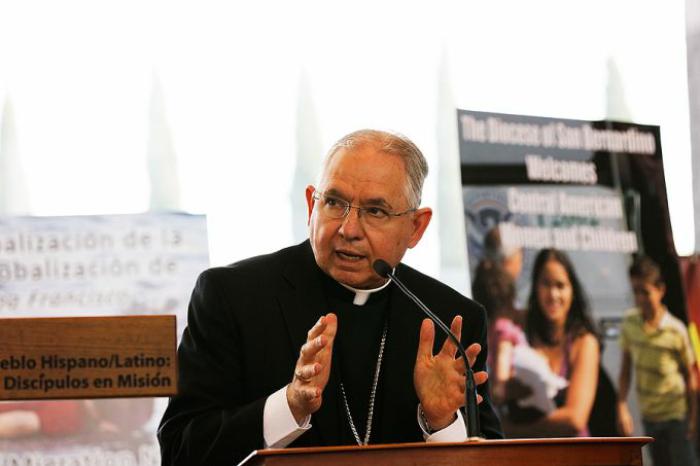
Archbishop Gomez: It's time to end the death penalty


Yes!  The death penalty doesn't work.  Archbishop Gomez: It's time to end the death penalty: Los Angeles, Calif., Sep 24, 2016 CNA/EWTN News.- Californians should vote for Proposition 62, a ballot measure to end the death penalty, the Archbishop of Los Angeles has said in a reflection.  If you're in California be careful how you interpret the ballot.  Read thoughtfully.

Monday, August 8, 2016

Orwell's Pro-Life Stance

Much to my surprise, I came across George Orwell's epiphany on capital punishment.  I was reading his essay, A Hanging, where he was describing a prisoner walking to the gallows.  The setting is a prison camp in India.  Orwell is an English policeman.  At this time in history, India is a colony of England.  This story really isn't much of a political treatise, but rather an opinion on  capital punishment.

The condemned man doesn't resist.  I noticed how human, Orwell depicts him.  He never calls him inmate, convict, criminal, in fact we don't know what capital crime he committed to deserve the ultimate punishment.  He is named a man, or a Hindu.  He had a dog who loved him very much because the dog goes crazy when he sees him.  But it isn't that fact, that brings about Orwell's epiphany.  (But Orwell knows the reader will start to see a human being.)  Orwell describes the event.

It was about forty yards to the gallows.  I watched the bare brown back of the prisoner marching in front of me.  He walked clumsily with his bound arms, but quite steadily, with that bobbing gait of the Indian who never straightens his knees.  At each step his muscles slid neatly into place, the lock of hair on his scalp danced up and down, his feet printed themselves on the wet gravel.  And once, in spite of the men who gripped him by each shoulder, he stepped lightly aside to avoid a puddle on the path.
       It is curious; but until that moment I had never realized what it means to destroy a healthy, conscious man.  When I saw the prisoner step aside to avoid the puddle I saw the mystery, the unspeakable wrongness, of cutting a life short when it is in full tide.  This man was not dying, he was alive just as we are alive....

And Orwell goes on the describe the humanness of the man.  I can easily imagine what Orwell would say about abortion.  I watched the embryo.  The tiny heart that rhythmically pulsed a beat to a miraculous dance of eyes and limbs leading to a crescendo of a real human being.  It is curious; but until that moment I had never realized what it means to destroy a healthy, potential human person.  When I saw the baby move away from the instrument of death, I saw the unspeakable wrongness, of cutting a life short when it has just begun.  This human being is not a tissue blob, he is alive just as we are alive...

Yes, it is unspeakable wrongness.  Who do we think we are to decide birth, death--life?  

Wednesday, May 9, 2012

Death by Life Sentence Without Parole


Somehow tonight's discussion on Doctor-Prescribed Suicide turned into a discussion on Capital Punishment.  Massachusetts will have a referendum this November on Assisted Suicide; that's what the topic was.

My "cloistered brothers" weren't that interested in legalization of assisted suicide and euthanasia.  The discussion segued into capital punishment.  Most of them felt that capital punishment was the easy way out.  If they were facing a life sentence with no chance of parole, and all appeals had been exhausted, then they would prefer to commit suicide.  The electric chair, the guillotine, lethal injection, whatever, as long as it were quick, would be better than living in prison.

The loss of hope would be death.  Living a long life in prison would be tortuous.  IOW, sentenced to life without parole was a worse death than the electric chair.

Monday, September 26, 2011

An Abomination!

That's what it is.  Capital punishment in a civilized society--it's incomprehensible to me.  Why do we do this, especially nowadays, with all the information before us that proves it doesn't work?

Let me give you some reasons why its wrong, and I won't start with religious arguments.

1. It doesn't work to cure violence.  Think about it.  Can you bite a toddler to teach him not to bite?  Besides the fact that biting the child doesn't stop him from biting, you have just taught him that he who bites harder wins.  And state authorized executions are inefficient and brutal.  Modern civilized society has many other methods of penal conduct to employ.

2. Capital punishment is a denial of the due process law.  It denies the individual the opportunity to present new evidence, or the opportunity to benefit from new laws, or scientific procedures to prove his innocence.

3.  It is cruel and unusual punishment because out of the modern industrial countries, the United States is the only one that still has capital punishment.  And we think sharia law is brutal!  IOW, capital punishment is rejected by other Western countries because it is cruel.  We're the only ones who still have it, therefore it is unusual.

4.  Capital punishment discriminates.  How come most of the executions are done on black poor people?  The answer is because they don't have the money to pay for a good lawyer.

5.   It's a waste of money.  The cost of prosecuting attorneys, defense counsel, juries, courtroom personnel, and all the fines accrued, plus appeals, after appeals, cost more than incarceration for life.

I have one more reason that I want to add that bridges secular and religious arguments.  That is that a society that respects life does not kill to solve its problems.

Religious reasons:

1.  Life for life is Old Testament.  It's sharia law.  We'd all be dead if we carried this out, much like we'd all be blind if we practiced an "eye for an eye."  And when you make a mistake, "oops?".  That's what we're doing.  Executing a man and finding out that he's innocent--"oops."

2.  We all are made in the likeness of God and as such deserve respect.  This is why Christians minister to those less fortunate than ourselves.

3.  Christians forgive.  That does not mean that murderers should be free.  Punishment should be applied, but human life must always be respected!  (Read that last sentence again, because it's important enough to be repeated.)

Keep these points in mind when you think about the execution of Troy Davis.  And kudos to the Vatican for strongly expressing its opposition to this erroneous application of capital punishment.

Thursday, December 2, 2010

Botched execution survivor stays on Ohio death row

Romell Broom
Botched execution survivor stays on Ohio death row: "COLUMBUS, Ohio - The only inmate in modern history to survive an execution attempt must stay on death row, the Ohio Supreme Court ruled Thursday in a decision that leaves the man's fate up to the federal courts."

C'mon! Once is more than enough! Are we civilized?


Wednesday, October 14, 2009

Death Penalty


October is Respect Life month in the US Catholic Church and that means reflecting on all aspects of life. I'm referring to the neglected and unwanted adult LIFE. I'm specifically talking about those we consider problems--prisoners on death row.

The Catholic bishops in the US have been calling for an end to the use of the death penalty for years. You can't right a wrong with another wrong. One mistaken death for punishment not committed is too many.

Some Facts About the Death Penalty

35 states have the death penalty; 15 do not.

Recent Supreme Court decisions have limited the use of the death penalty by declaring it unconstitutional to execute persons with mental retardation and juveniles under the age of 18, or to impose the death penalty when no murder occurred or was intended. The court has also ruled that defendants are entitled to have a jury decide whether to impose the death penalty.

Approximately 3300 inmates are on death row in 35 state, military, and federal prisons.

Since 1973, there have been 135 exonerations of death row inmates.

Since 1976, there have been a total of 1,171 executions in the United States, including 35 in 2009 (through July).

The above picture is one of a priest hearing confession. "Oh Lord forgive them."

The California death penalty system costs taxpayers $114 million per year beyond the costs of keeping convicts locked up for life (L.A. Times, March 6, 2005). In Indiana, the total costs of the death penalty exceed the complete costs of life without parole by about 38 percent, assuming that 20 percent of death sentences are overturned and reduced to life (Indiana Criminal Law Study Commission, January 10, 2002).
*Source: Death Penalty Information Center

Saturday, October 10, 2009

Innocent Until Proven Guilty


I was looking at the candidates hoping to take Kennedy's place. While reading about Martha Coakley I came across the Gerald Amirault case. That's where I veered off. No longer was I interested in Martha or Gerry, but justice. That is what interested me. "There but for the grace of God, go I."

There is a laudable group known as the Innocence Project that helps prisoners prove that they have been convicted wrongly. It seems to me that just one instance is enough to discredit capital punishment. Our system is not perfect; but it's better than others. With that it mind, those involved in our justice system should work toward improving discrimination, misidentification, unreliable science, false confession, fraud, misconduct from informants, suspect DNA, and bad lawyering.

There is a list of people on death row who have been exonerated. Read the list and what convicted them. Makes you wonder--if it can happen to them, it can happen to you. I repeat; "There but for the grace of God, go I."

Sunday, June 21, 2009

Dominique Green

I just finished reading A Saint On Death Row, The Story of Dominique Green, by Thomas Cahill. I don't know whether I liked it, or not. I don't know whether to recommend it, or not. I don't know what to think. Odd! It's strange because I can't stop thinking about it.

I'm surprised that the author, Thomas Cahill would write such an obviously subjective book. Cahill is the author of How the Irish Saved Civilization, The Gifts of the Jews, etc.. I consider him as giving scholarly objective views. A Saint on Death Row, from the "get go" paints Dominique as an innocent victim of society.

Yes, Dominique had a terrible upbringing. Hell! so do a lot of people, and they don't turn to crime. He didn't get out that environment. He got too caught up in it before he even wanted to get out. What happened......happened. Was he guilty? You never know.

What interested me was his transformation, inside prison. I loved that. I've seen it myself. I think that maybe some people, for the first time in their lives, have structure. Improbably, they also have opportunities. Yes, opportunities! They actually have the time, without being doped up, or drunk, to consider their lives. There are also opportunities to learn from others, programs offered, and to meet God. Ah, yes........God.

You have to be quiet to hear His voice.

Dominique did hear that whisper. He was transformed. That was a good story, but not the one that is staying with me. I couldn't get over the fact that this country, the U.S.A., is one of the few civilized countries that still have the death penalty; along with Iran, Iraq, China and some other non Christian countries. Yikes! We're aligned with them! Deplorable.

It doesn't really matter whether Dominique was guilty or not. The fact is he ended up on Death Row because he was black and poor. Ha! Not having a good lawyer is the determining factor in all too many cases.

Sigh..........it's time to overhaul our justice system. I know that true justice is not found in this world. But it's time.

Thursday, February 12, 2009

Florida Bishops Ask to Close Death Row

Florida Bishops Asking to Close Down Death Row In Appeal for Life of Executed Tampa Man By Karna SwansonTALLAHASSEE, Florida, FEB. 11, 2009 (Zenit.org).- The bishops of Florida have asked Governor Charlie Crist to "set a new standard of decency" for the state by doing away with the death penalty.

In a letter sent last week by the state's episcopal conference, the bishops also appealed for the life of Wayne Tompkins, who was executed by lethal injection today in Tampa. Tompkins was found guilty of murdering 15-year-old Lisa DeCarr, who was his girlfriend's daughter."Set a new standard of decency for the State of Florida," the bishops appealed, "by abandoning executions and commuting death row sentences to life in prison without possibility of parole."

Sheila Hopkins, associate director for Social Concerns/Respect Life of the Florida episcopal conference, explained to ZENIT that the position of the bishops is not to say, "We should let people go free, but that they are being punished by being put in prison for the rest of their life." Hopkins also noted that there have been several cases of death row inmates who have been found innocent. "We have to ask ourselves if we are killing an innocent person. That would be a terrible tragedy."The letter of the bishops' conference, however, did not affirm Tompkin's innocence, but rather asked that Crist "replace the violence of death by execution with life long imprisonment in the penal system as a way to protect society and ensure punishment for offenders." "We pray for healing for DeCarr’s family and friends who have suffered the pain of losing their loved one. No punishment, no matter how severe, can ever erase the grief caused by her wrongful death," the prelates added. "You have the singular ability to change the course of action to be taken by the state in death penalty cases," the letter continued. "In pursuing justice for victims of violent crimes, the state must not be blinded by politics that diminish human dignity and the sacredness of all life, including that of convicted criminals. "Florida should join the ranks of other states which have abandoned executions because they have not been a deterrent to crime and have raised serious concerns about fairness of sentencing in the justice system."

Human Dignity

 It just dawned on me that God created me for Himself.  In Genesis 1: 1-31, we see God made everything for mankind.  I'm in awe to reali...