The Second Objective by Mark Frost was written for readers interested in military history. The setting is Europe, WWII. The Nazis are losing and they make a last ditch effort to take control. We encounter the Battle of the Bulge and a counter plan to assassinate the commander of the allies.
The characterization was good. Heroes and villains depicted humanity's best and worst. The pace could have belonged to a "thriller." I learned a little history even though I thought I knew it.
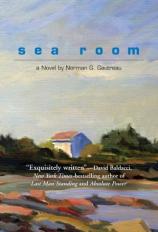
Sea Room is a novel about Maniacs (people who live in Maine to people who live in Massachusetts). The author is Norman G. Gautreau. I think I liked the characters so much because I have a Mémé and can relate to these descendants of Quebecois. Also, I learned a lot about people who chose to farm next to the sea and fish. My son-in-law's family were farmers and lobstermen. I always thought it strange that one would farm next to the ocean, but Gautreau made it sound preferable.
I loved the characters: Pip and Zabet (grandparents), Gil and Lydie (parents), and Jordi. They all lived together in the same house. That's another reason why I liked them. I think it's nice that three generations lived together.
The time is around WWII,which is before my time but not much, so I can relate. Gil goes to war and is killed. The family, understandably, has a hard time coping. Lydie starts to date the town bully. Zabet prays more rosaries. Jordi becomes obsessed with building a boat his father said he would build. Eventually, everyone becomes obsessed with the boat, including neighbors.
The boat is vandalized. It does get built, however, regardless of setbacks. Once in the water, it is threatened with two hurricanes. Thanks to leaving sea room, the boat and actually all the people in the family survive, too. It's a nice story.
Sea room is actually the concept of always having an alternative, a plan B, or a way out.
Monday, March 6, 2023
Salt to the Sea by Ruta Sepetys is a historical novel. The reader views the story through four eyes: Joana, a Lithuania nurse. Emilia, a fifteen-year-old pregnant Pole, raped by the Russians, Florian, a German apprentice art restorer who didn't want to cooperate anymore. Alfred, a deranged German sailor.
Everyone has heard stories of what the Russians do to their occupied countries. They raped their way through Europe in WWII. Poor Emilia is traumatized. She would have been raped again, were it not for Florian, who saved her. After that, Emilia sticks to Florian like white on rice. Joana runs hither and thither doing whatever to help. Alfred is a haunting, dangerous creep.
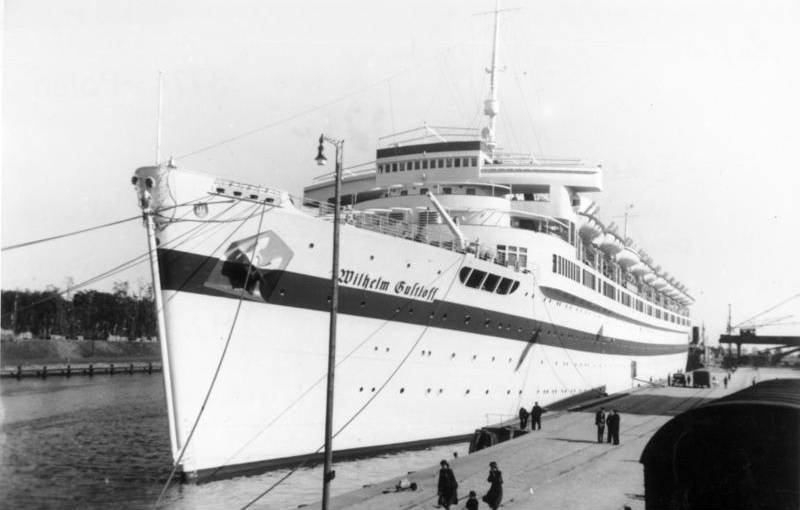
They are all fleeing the Russians. They want to get on a boat and get away as fast as they can. The four protagonist, plus a little boy, all end up on the ship, Wilhelm Guftloff.
The ocean liner looks formidable, doesn't it? So did the Titanic.
It was sunk by Russian torpedoes. Too many drown including Alfred and Emilia. Emilia had her baby on ship and the newborn survives, adopted by Joanna and Florian, plus the little boy.
Heart wrenching, exciting and a good read. It's history and it can be stranger than fiction. My only thought is a question. What does the title mean, Salt to Sea? I think it means that salt is a precious commodity like people.
Two families and the communion of saints: is a story you will remember. The Ulma family lived in Poland. They were a family of eight and 8/9. The oldest child was eight and the youngest was born and died as his mother, along with the rest of the family, were shot by the Nazis for hiding Jews. Read the story.
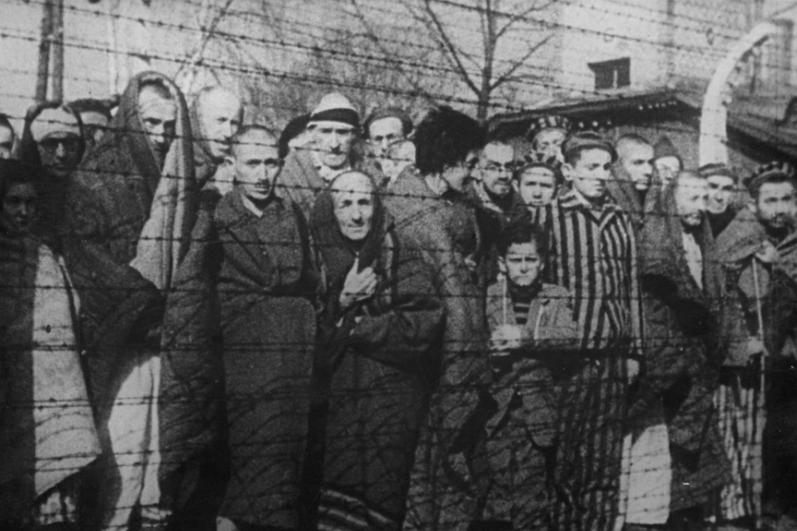
Men, women and children are seen behind barbed wire after the liberation of the Nazi death camp Auschwitz-Birkenau in 1945 in Oswiecim, Poland. CNS photo/Yad Vashem Archives via Reuters
I've been on a hiatus down the Cape. While there, I devoured the book, Lilac Girls by Martha Hall Kelly. I was engrossed. The story is true; the details aren't, but they give you a taste of what Kelly wanted to convey--an important part of history.
The heroine was a real person, Caroline Ferriday. She was a socialite who before WWII was trying to help French orphans. Then war breaks out. After the war, Caroline learns about the experiments the Nazis were doing on healthy Polish women and feels she must help them.
Parallel to Caroline's story is Kasia Kuzmerick. She is one of the Polish women who were victims of the experiments. Her story is riveting.
Also is the story of the doctor who did the experiments, Herta Oberheuser. A Nazi who let her ambition drive her.
The story is about the three women. Also, remember that after the war, Poland was annexed by Russia. The poor women who were experimented upon weren't helped, at all. Caroline Ferriday gets them to the United States where they are treated.
Ravensbruck is the name of the camp where the Polish women were interred. What a book! God help us. May horrors such as those performed in Ravensbruck never happen again.
I'm reading Life in a Jar: The Irena Sendler Project by Jack Mayer.
I will write a review of the book, another day. However, in the book, Irena tells the story of Jan Karski. What he did affected me so much, that I need to post it immediately!
The time is World War II, Poland. The year is 1942. A spy by the name of Jan Karski, from the Polish-government-in-exile, was assigned to gather evidence of the Holocaust out to the world. Karski toured the Polish underground network. He was disguised as a Ukrainian partisan in uniform so he could get close to trains, prison camps, and extermination centers. A dentist removed several of his teeth so the resultant swelling would disguise his Polish-accented German. I guess it was obvious that he had recent dental work done.
He traveled taking pictures of places, documents and other evidence of the genocide. He went from Poland to Berlin, then through Vichy France to Marseilles where the French underground smuggled him across the Pyrenees into Spain. Several weeks later, Jan Karski related his story in London. Newspapers declined to publish his story, nevermind the pictures! No one believed him.
Today there is a Jan Karski Award for Valor and Compassion, presented by the American Center of Polish Culture.
I guess it isn't his courageous deed that so impressed me, worthy as it is, as the refusal of the Allies to believe. What other evidence did they need?!