Search This Blog

Showing posts with label Forgiveness. Show all posts

Thursday, June 8, 2023

A Reason to Forgive

 Holding on to resentments only binds you closer to the person you can't forgive.  You are hurting yourself.  You need to let go for your own mental and emotional health.  For your own good, you need to let go.

That's why Bishop Desmond Tutu said that you have no future until you forgive.


Sunday, August 22, 2021

A Shepherd's Post: St. Peter Sometimes Feels Like the Guy Who Asks Qu...

A Shepherd's Post: St. Peter Sometimes Feels Like the Guy Who Asks Qu...: Matthew 18:21-19:1  This is a good blog post about forgiveness. The concept of forgiveness is a hard one.  I think God will have to judge us whether we forgave or not.  Some people have a personality that finds it easy to forgive.  They're just easy-going people.  Others are the opposite.  They're just prickly.

So it's not fair.  Everyone's temperament and personality are different.  That's why God will have to be our judge.  

Friday, March 12, 2021

The Burden of the Past

 We should live in the present.  We can't do anything about the past; it's done.  The future might not even happen, so why worry about it?

That's easy to say but if your past is horrendous, how can you forget it?  If you had a terrible childhood, it's hard to rise above it.  Think if you had a terrible childhood and you murdered your abuser.  How could you rise above it?

I am thinking specifically of my "cloistered brothers."  The scenario I described is not unusual.  Many of my "cloistered brothers" had terrible childhoods and they did go on to do terrible things.  

Yet, God tells us to have hope.  The Catholic Church offers us the Sacrament of Reconciliation. 1 John 1:9,  If you confess your sins, God is faithful and just to forgive us our sins and to cleanse us from all unrighteousness. Psalm 103: 10-13 tells us that God's merciful forgiveness is as wide as the east is to the west. 

Ephesians 1: 7-8,  "In Him we. have redemption through His blood, the forgiveness of sins..." 

You can't forget the past but you have to try to deal with it in such a manner that you trust that God is beside you and helping you.  You can't fix what happened.  You need to not let that sin happen again.  You have to learn to be stronger.  Use the past to grow into a better person.

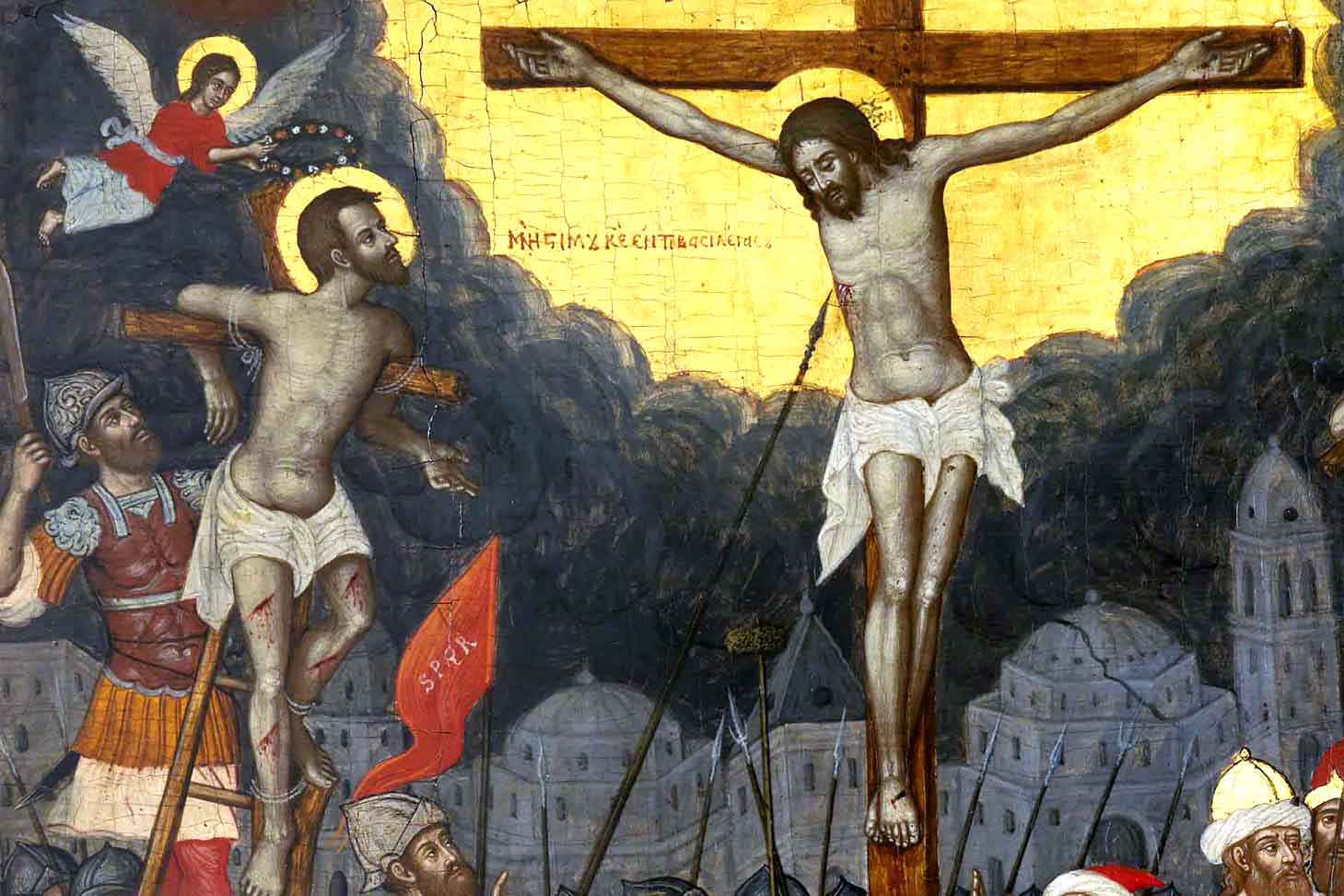
Concentrate on the future.  Be a better person.  Concentrate on getting to heaven.  Remember the criminal crucified with Jesus.  Jesus forgave him and told him that he would be with Him in heaven.  You can too.


Saturday, September 15, 2018

The Antidote to Hate

A few days ago, I blogged about hate.  Here's the rest of that essay.

Hate is a choice.  You have to choose to stop feeding it.  You need to choose to free yourself from your own mental, physical, emotional, and spiritual health.

It certainly isn’t easy to stop hating someone.  Rarely, is it instantaneous.  There is some truth to the axiom, “Time heals all wounds.”  I said some truth.  The hurt may be dulled but not forgotten.  But hurt shouldn’t be forgotten; it’s part of the process of discernment.  It could be a lesson in life.
How to stop hating depends on what or who is the cause.

 I posit that “forgiveness” is the path to heal the hatred one harbors in their heart.  Forgiveness has nothing to do with apologies.  It has nothing to do with reconciliation.  It is not about justice.  There is no true justice in this world.  Forgiveness is about healing yourself.  It is taking control of your feelings and not letting your feelings of “hate” control you, change you, make you into a negative, stressed and depressed person.  It is a conscious choice!

Forgiveness is the resolution.  It’s a choice to want to end negative thoughts and feelings of hate and to seek a personal peace of mind.  It’s a choice to be a better version of you.  It is wanting to heal your life and make yourself mentally, emotionally and spiritually healthy.  It is choosing to be healthy and not sick.

Hate is destructive only to you.  It causes you to suffer, no one else.  The object of your hate could be oblivious to what you feel about them.  They could care less.  They are not worth wasting any emotional energy on them.  The internal physiological effects of anger and hate only hurt you.  Hate makes you a prisoner to anger, resentment and pain.  And only you have the key to free yourself.

The key to free your heart from the emotional prison of anger, resentment, and hate is forgiveness. Forgiveness is for you.  Give yourself permission to forgive.  After all, when you think about it, the person who hurt you could have apologized immediately and you weren’t ready to accept it so you didn’t.  You chose anger, resentment, and hate.  They could have apologized many times and you could have ignored all attempts at reconciliation.  It was easier to hate.  You weren’t ready to forgive because you enjoyed nurturing your hurt.

Stop it.  You are hurting only you—only you! 

Don’t feed the evil wolf.

Archbishop Desmond  Tutu taught the South African people who were victims of apartheid and genocide, that they had no future unless they forgave.

Jesus forgave from the cross, “Father forgive them, for they know not what they do.”

The Lord ’s Prayer asks that we forgive us our trespasses as we forgive others.

Let’s hang hate so that it can’t be heard.  You can kill the word.  Take it out of your vocabulary. 


Take it out of your heart.


Sunday, April 30, 2017

Steps Towards Loving Your Enemy

MK artwork

My "cloistered brothers" and I were discussing the Gospel of Matthew 5: 43-46.  Here Jesus is asking us to do something very hard--not impossible, but as close to impossible as one can get (sometimes).

(1)  It's natural to hate those who harm you.  Even a baby will slap at a mosquito.  It's not because he wants to hate the mosquito, but rather he wants to stop the pain.  It's as simple as that.  Someone hurts you, you want to stop that hurt.  The knee-jerk reaction to stopping hurt is to hurt back.
      Once one recognizes this fact, then he can see that he may not even know the person who is hurting him, so how can he hate him?  What he hates is what he is doing.

(2)  Another thing to consider is Jesus' command "to love your enemies," itself.  Think of the different kinds of love: agape, eros.  Also, love is translated as "charity."  So how do you love an enemy.  First, think of love not as agape, certainly not eros, but as St. Thomas Aquinas in the Summa Theologica II-II, 26 teaches us, "To love in charity is benevolence: to will the good to a person or God...."
     Hence, don't harm the person you hate.  Think "Do unto others as you want them to do unto you."  So push yourself to do something good to that person.  Some acts of charity my "cloistered brothers" did for their enemies: nursed, made a meal and fed the person, gave them something they wanted, etc.
     It seems that these acts of charity softened the enemies' stance.  It was a visible difference.

(3)  Be open and receptive to your enemies' gestures toward friendliness.  Then talk.  Talk again.  Talk, some more.  Communication should bring understanding.  Understanding will dissolve the hate and soon you will find forgiveness.

That's the method we came up with.

Monday, January 23, 2017

God's forgiveness is call to sin no more, pope says

God's forgiveness is call to sin no more, pope says: VATICAN CITY (CNS) -- God forgives sinners unless they keep reminding him of their errors by pretending they have no need to change, Pope Francis said.  Of course, the Holy Father is correct, but  how to do what we know we should?

Wednesday, January 4, 2017

A Story of Forgiveness


While driving my granddaughter to school, we were listening to a Bible audio tape.  We heard the story of Naaman being cured of leprosy (2 Kings: 5: 1-15)  The narrator told the story to give an example of "forgiveness."  I was surprised.  I had always thought of the Naaman story being a story of "faith in God".  But now I am corrected.

How is it a story of "forgiveness?"

2 Kings 5: 2, tells us that a little girl was captured from Israel and brought to Syria and made to be a servant.  She certainly didn't go happily.  Imagine the circumstances of how a little girl could have been captured and taken from her home.

How would you feel?

Well, she didn't feel that way.  She forgave her captives.  How?  Why? is not point.  She did.

We know this because she tries to help her master.  She tells him about a prophet that could help cure Naaman's leprosy.  The story tells how it comes about in 2 Kings: 5 3-15.

And Naaman is cured because that servant girl forgave him for what he had done to her in 2 Kings 5:2.

Saturday, October 29, 2016

Forgiveness Heals

Another thing I learned from Life in the Jar: The Irena Sendler Project by Jack Mayer, is about forgiveness.  I keep relearning and relearning the meaning of this concept.  But the way, Norman Conard, the history teacher,
explained it to his students resonated with me.  He said that not forgiving is like taking poison and hoping the guilty person will hurt.  Putting the perpetrator to death only releases him from life.  His death leaves you bitter and hurting for the rest of your life like YOU are in prison.  Hate wears you down and your enemy doesn't even know about it.

An Indian Grandfather tells a story that two wolves lived inside him and were always fighting to control him.  One wolf is vengeful and angry, the other forgiving and kind.  The grandson asked his grandfather, "Which one wins:"  The old man smiled and said, "The one I feed."


Tuesday, January 5, 2016

Is There Anyone We Wouldn't Love?


Sister Mary Lou Knownacki is my "go to" person for "forgiveness inspirations.  She seems to always say what I wish I could not only say, but do.  What particularly strikes me is the example of Phan Thi Kim Phuc.  Here is the famous picture of her running naked down a road with her back on fire from napalm during the Vietnam War. The young soldier, John Plummer, who organized and participated in the air strike on her village in 1972 was haunted by that Pulitzer Prize winning photo.

Kim Phuc underwent plastic surgery, married, defected to Canada and became a spokesperson for UNESCO.  She forgave him and moved on.

But John Plummer returned home racked with guilt, divorced, turned to alcohol, and then met his second wife, who led him to God and eventually to serve as a minister. Plummer said he thought about Kim Phuc every day and wanted to tell her how sorry he was but could not summon the courage to contact her.

Then in 1996, Kim Phuc was the main speaker at a special service at the Vietnam Veterans Memorial in Washington D.C. Plummer went to the observance and heard Kim Phuc say that if she met the pilot of the plane she would tell him she forgives him and that they cannot change the past but she would hope they both could work together to build the future.

Through friends, Plummer got the word to Phuc that the soldier she wanted to meet was there. "She saw my grief, my pain, my sorrow," Plummer wrote. "She held her arms to me and embraced me. All I could say was 'I'm sorry. I'm so sorry. I'm sorry' over and over again. At the same time, she was saying 'It's all right. It's all right. I forgive. I forgive.'" Kim Phuc and Rev. Plummer met many times after that and even worked together on a few projects. Kim Phuc, who lost two brothers in that 1972 bombing raid, now considers Plummer her brother. Plummer says, "She's the closest thing to a saint I ever met."

Forgiveness is so necessary.  Otherwise, bitterness festers.  It's a wound that won't heal.  And the offender can't heal it.  Only the wounded person can heal it because the wounded person maintains it.   
Only the wounded person can free themselves from the burden of hurts.  If we're honest with ourselves we might see that maybe our side of the story isn't the only side.  Do we even remember clearly what happened?  Are we really sure it was intentional?  Mary Lou Knownack asks, "Is there anyone we wouldn't love, if we only knew their story?" Do we pray to forgive?

Thursday, August 27, 2015

Bitter Hurt


Drawing by MEK

I thought I'd forgiven him.  At least I was trying.  I was going through the motions.  But when we were together, standing next to each other.  I'd feel internally so cynical and angry, and that made me anxious and confused.  It was depressing me because I was trying--praying not to feel this way.

The only way I can describe it is that he made me feel broken, not healthy.  Somehow, he made me not feel like myself.  Was he to be blamed for something he didn't even know about?  "Is he making me feel broken or is it myself?"  To be truthful, I had to admit that he probably had no clue how I felt.  So I was only hurting myself by harboring the resentment, hurt and anger that made me feel broken.

"What!  Am I stupid?"

"It's not him; it's me."  Slowly the realization that forgiveness wasn't about him, at all.  It's more about healing MYSELF.  I have to forgive to make and keep myself healthy.  This was an epiphany.  What I perceived as a wrong committed by him, somehow morphed into a wrong committed by me.  How did that happen?

Time was a factor.  Over time I had nursed my hurt into a gnawing bitterness that I perversely enjoyed. Blaming him was easier than thinking reasonably. So much time had gone by that he wouldn't even remember what had happened if I discussed it with him.  Now it's time for me to get over it, too.

OK.  Time for healing.  I once read Bishop Tutu's No Future Without Forgiveness and understood and recommend the book.  However, for me, it was an abstract concept.  Now however, it's palpable.  I will stay broken unless I get over my "hurt."  Time will help, but for now I can pray to be healed.

...as we forgive those who trespass against us...

Thursday, June 25, 2015

Forgiveness Behind Bars


A lot of the advice on how to deal with forgiveness doesn't work in prison.  I feel like I'm in over my head.  I'm asking for advice and not giving it.


It is a fact of our human condition that our first response to anger is to lash out.  Christianity tells us to forgive and not to exact revenge.  However, not to react in a retaliatory manner would be perceived as weak, in a prison environment.  A big guy may be able to pull off a "turn the other cheek" attitude, but not the average or small one.  How should a Christian inmate respond?


One way to handle situations is to visualize forgiveness.  In one's mind the situation is reenacted.  This fantasy has one as strong and responding with wisdom.  I don't think that would work.


Would it be acceptable to visualize the opposite?  Fantasize pounding the sh** out of the offender.  Wouldn't that get the aggression out?  The intention is to do violence in your mind, so you don't do it for real?  Would that be a sin? 


Communication isn't possible with crazy people.  And some of the people in prison are not mentally well.  The normal methods of handling anger just aren't feasible.  What would Jesus do?

Monday, March 17, 2014

What Are You Doing!

From the Mirror of Love by St. Aelred:

...It was not enough to pray for them: he wanted also to make excuses for them.  Father, forgive them, for they do not know what they are doing.  They are great sinners, yes, but they have little judgment; therefor, Father, forgive them.  They are nailing me to the cross: if they had known, they would never have crucified the Lord of glory; therefore, Father, forgive them.  They think it is a lawbreaker, an imposter claiming to be God, a seducer of the people.  I have hidden my face from them, and they do not recognize my glory; therefore, Father, forgive them, for they do not know what they are doing.

I've often thought the same.  God's power and majesty was hidden.  I probably would be no different than the people thinking Jesus was just a "nut."  

Wednesday, March 6, 2013

Cardinal Mahony and Forgiveness

Surfing the net this morning, I came across Cardinal Roger Mahony's Blog.  He was blogging about "forgiveness."  Of course, my interest was piqued, and I read on.  He referenced, the same Guardini article that I used on my post on forgiveness. I wanted to comment on his post, but like myself, he doesn't have "comments."

I noticed that he does have a Facebook page.  So I went to that and posted what I wanted to say.  I also noticed other commentators on his page.  Most were sharply negative, crude, and full of deprecation.  Ah, flashback!

Coming from Boston, which is ground zero for clerical sex abuse, I empathize. Time is healing, and my righteous anger has yielded to rational judgment. I understand that our church leaders at that time followed standard procedures, followed current medical, psychological expert counsel, and legal advice.  Even so, they were in charge and bear the burden of responsibility.  The buck stopped with them.

Ministering to men in prison, I have met many inmates who are good, decent, law abiding citizens.  Their crime was committed under the influence, or they mentally snapped, or it was an accident.  It doesn't matter.  Someone has to take responsibility.  Someone has to pay for the wrong that was committed.  That means that some of these bishops should be thrown in jail.

I think Cardinal Law and Mahony should serve time.  They should take the lead and take responsibility.  Jesus did.  Jesus was in prison.  So weren't some of the apostles.  Church leaders in prison would lead by their example.  What would the New Testament be, without St. Paul's letters from prison?

Cardinal Mahony asks for forgiveness.  I ask him to see my post "Forgiveness is Not the Same as Absolution."     People can't forgive Cardinal Mahony.  No one can forgive Cardinal Mahony but Cardinal Mahony.  Forgiveness is for yourself.  You can't force people to love you, nor forgive you.  They have free will and have to chose rightly.  That's up to them.  Even if a perpetrator tells his victim that he is sorry, he can't make the victim forgive him.  The victim has to overcome his emotional baggage before he can accept apologies, and forgive himself.

Note that Jesus never says, "I forgive you," to all those who tortured Him.  He prayed for them.


Monday, March 4, 2013

Forgiveness is for the Victim


Forgiveness is for the Victim.  It is permission to let go of the emotional baggage that is weighing you down.  Monsignor Romano Guardini, in a reading from Magnificat, p. 79-80, explains what I’m beginning to see.  We react like animals, i.e., strike back.  That’s our first reaction.  But we are human beings and need to overcome that first primitive instinct.

Creatures are so ordered that the preservation of the one depends on the destruction of the other…He who injures me or takes something valuable from me is my enemy, and all my reactions of distrust, fear, and repulsion rise up against him…Here forgiveness would mean first that I relinquish the clear and apparently only sure defense of natural animosity; second, that I overcome fear and risk defenselessness, convinced that the enemy can do nothing against my intrinsic self…But the crux of the matter is forgiveness, a profound and weighty thing.  Its prerequisite is the courage that springs from a deep sense of intimate security, and which, as experience has proved, is usually justified, for the genuine pardoner actually is stronger than the fear-ridden hater.

Yes, ….what Monsignor Guardini says.

Sunday, March 3, 2013

Forgiveness is not the Same as Absolution

Image Courtesy of Stained Glass Inc.


For the past few days, I’ve been mulling over a question: How do you act like a Christian in prison?  Then last night, while watching the DVD, “For the Greater Glory,” I realized that each time a Cristero told the man about to shoot him, “I forgive you,” that murderer didn't have a clue what he was saying.  The poor victim was saying he forgave, for nothing…or was he?

Last Wednesday, my “cloistered brothers” and I discussed “turning the other cheek,” and “forgiving your enemies.”  How do they do it, particularly in their environment?  After an hour or so, no definitive answer was determined.  But that’s not the end of the thinking process.  We’ll continue it, next meeting.

It is difficult, in my “cloistered brothers’” environment, because they can’t afford not to have a macho persona.  To anything less, than the attitude that I can take down everyone in here, would be perceived as cowardness. 

On one hand, being a Christian makes a big positive difference in my brothers’ lives.  Christianity offers hope.  It gives meaning to life.  Trying to live in the light gives purpose, a positive outlook, and a productive use of time.  Belonging to our community offers a renewed sense of self that helps overcomes guilt.  New relationships are formed.  Belonging to our community provides practical and moral support.  Moreover, they feel that their self-control and tolerance have made them better men.    In community, my brothers are striving to be good Christian men.

Meanwhile, outside on the quad, or in the cell blocks, it’s business as usual, shouting obscenities, swearing, gambling, drugging, extortion, sex, bullying, violence, etc.

Mix the Christians with those not, and you have the Cristeros saying “I forgive you,” to a psychopath, i.e., he doesn't have a clue why or even what you are saying.  Saying “I forgive you” could be dangerous to your health.  As Jesus said, “Father, forgive them, they know not what they are doing.” (Luke 23:34)  Look at the beautiful stained glass window above, courtesy of Stained Glass Inc., Jesus doesn't tell His tormentors He forgives them.  He prays for them.

I’m still chewing on the idea of my “cloistered brothers” problem: How to act like a Christian and not become a victim of the bullies.  Forgiving their enemies would be perceived as condoning their bad behavior.  My ideas are not definitive.  I’ll probably post about them again and again. 

Some passages in the New Testament have Jesus not forgiving unless the sinners repent.  See Acts 3:19, Luke 13:3 & 5.  So why did the Cristeros say they killers were forgiven when they didn't ask for it?  Even if they were priests, they couldn't give absolution without repentance.  They should have prayed for them, like Jesus did. 

Following Jesus’ example, forgiveness is for the benefit of the victim.  The victim has been hurt and will feel anger, resentment, revenge, bitterness, etc..  Forgiveness disconnects the victim from these emotions, if he is blessed to overcome these emotions. 

Forgiveness is a decision to not be a victim any longer.  Leave the exacting of justice to God.  Then by the grace of God, the victim will progress and protect himself and others by not allowing the perpetrator to commit more hurt.  It would be great if the victim could pray for the perpetrator. 

One has to master his emotions, releasing oneself from a lifetime of bitterness.  Forgiveness is the best means of doing that.  Only priests can give absolution, so don’t even entertain that thought. 

Forgiveness is for the victim. 

This is where I am now.  Reconciliation is between at least a couple of people.  Absolution is between confessor and penitent.  Forgiveness is for oneself.


Thursday, January 24, 2013

Forgiveness Again and Again

Apropos to my post yesterday, on "forgiveness," is this Pastoral Exhortation, from the USCCB, on Forgiveness.  Please read it:
 http://www.usccb.org/prayer-and-worship/sacraments/penance/upload/Penance-Statement-ENG.pdf  

Wednesday, January 23, 2013

Forgiveness

Since I'm in prison ministry, I sometimes listen to the victims of crimes.  They tell heart wrenching stories of being hurt.  They find it hard to forgive.  I mostly just listen.  I figure it's the Holy Spirit that has the job of changing hearts.  I feel very deeply for them, because they go over and over the past.  The perpetrator of the crime committed against them is in prison.  They're not.  Yet, their anger, hurt, and that very unforgiveness has put them in a prison, too.  And in not forgiving, they're not moving on.  They're keeping themselves in prison.

And it's not only crime that does this.  I was reminded of this, when I read a young person's poem about the girl who left him.  He is angry, hurt, and wishes to get revenge.  Every time I see him, I listen to him lament his lost girl.  He's still in his self inflicted prison.

How does one change this perspective?  After the period of shock, and grief, one needs to look after one's own best interests.  Counseling can help.  Spiritual direction can help.  And asking oneself, how important is it to hold onto this pain, hurt, anger, and unforgiveness?  Over time, I pray, that all people hurting, realize that for their own well being, they need to forgive.

Nelson Mandella said it best, "There is no future, without forgiveness."

Thursday, July 5, 2012

Forgiveness

I was watching EWTN's Crossing the Goal.  This is a program for men.  That's why I was watching it.  Seriously, I wasn't paying that much attention.  I was focused on folding laundry and that program just happened to be on.


Anyway, the guys were talking about how hard it was for men to forgive.  My pastor is always talking about that.  He's mentioned how he's struggled with forgiveness, all his life. 


I can really relate.  The last time someone really hurt me, it took me three years to get over it.  All the time, I thought I was managing it pretty well, but I was only fooling myself.  It was always present in my mind.  I think I actually went through Elizabeth's Kubler-Ross' stages of grief, because I passed through stages of processing the hurt.  


Denial:  Praying to forgive didn't occur to me because I was telling myself that it was the other person's fault.  I prayed for that person, not myself.  I was right; he was wrong, so I prayed for him.


Anger:  Anger wasn't the emotion I felt.  Surprise that it happened.  Hurt, because he thought what he thought, and then shock at his reaction.  I was saddened, not angry.  This is where I think men and women differ.  I took the tongue lashing I received very personally.  If I could have punched him in the mouth, that would have ended everything.  But the thought never occurred to me.  I wanted to cry, not punch.


Bargaining:  In retrospect, I was constantly trying to look at what angered him through his eyes.  It took three years for me to see it clearly.  


Depression:  I never was depressed over the situation.  But the Kubler Ross stages are for death and dying and this wasn't a physical death.


Acceptance:  I was wrong.  He was right.  I pray that never happens again.


This thought process didn't come folding laundry.  It was after, praying Compline.  I was meditating on Psalm 32.  


Happy the man whose offense is forgiven,
whose sin is remitted.
O happy the man to whom the Lord
imputes no guilt,
in whose spirit is no guile.   


I kept it secret and my frame was wasted.  I should have punched him in the mouth--get it over with.
I groaned all the day long
for night and day your hand
was heavy upon me.
Indeed, my strength was dried up
as by the summer's heat.                            How apropos! It's July 5.


But now I have acknowledged my sins;
my guilt I did not hide.
I said: "I will confess
my offense to the Lord."
And you, Lord, have forgiven
the guilt of my sin.


So let every good man pray to you
in the time of need.
The floods of water may reach high
but him they shall not reach.
You are my hiding place, O Lord;
you save me from distress.
You surround me with cries of deliverance.          Thank you, Jesus!

Monday, September 12, 2011

Is Forgiveness Weakness?

Mass tonight had Father Chris still talking about forgiveness.  He spoke of the concept of forgiveness and the act.  He spoke of personal forgiveness.

You know what I was picturing?  Fr. Chris was trying to have us see that forgiveness is NOT weakness.  It takes a better and stronger person to forgive.  So I'm picturing a little guy being pushed around.  It makes him angry to be picked on so he becomes belligerent himself.  He feels that he can't walk away and forgive and forget because he is weak and needs to prove himself otherwise.

A physically big person wouldn't even bother with the little guy.  The bigger person knows he can hurt the smaller person, if he wanted to.  Of course he could.  The bigger person is a better person for not hammering the little guy.

Wouldn't the same be true with the virtue forgiveness?  It would be a generous gesture to forgive.  A narrow, mean, small act to not forgive?  In fact, Indira Gandhi once said, "Forgiveness is a virtue of the brave."

Tuesday, September 6, 2011

7 x 77 = oo

I was reading the Gospel for the Twenty-Fourth Sunday, (Matt. 18: 21-35) and laughed at a memory.  One of my friends was ranting on and on about a mutual acquaintance.  When I quoted, ""Lord, if my brother sins against me, how often must I forgive?  As many as seven times?"   Jesus answered, "I say to you, not seven times but seventy-seven times."


My friend snapped at me, "She's used up more than THAT!"

I laughed then, and I laugh now.  I don't get too upset about people who want revenge.  Some people treasure grudges.  It seems to keep them going.  Maybe it gives them a purpose in life.  And I have reflected on this, quite a bit, especially since I'm in prison ministry.

Victims, understandably, want "justice."  What that is, is different for each person.  That should tell you something, right there.  But however people determine what is "justice" here on earth, will never be satisfying.  True justice is divine.  Vengeance seems self destructive.  It changes one.  As Archbishop Tutu said, "No Future Without Forgiveness."  And I've always wanted to know how someone felt who harbored revenge on someone and then found out they were wrong.  How do you spontaneously turn off the hate that was nurtured so long?  What about new evidence proving that someone else perpetrated the crime, how do you realign your vengeance?   What's that feel like?  What does that do to you?

I also think that you can't blame people for finding it hard to forgive.  I think it's a personality type.  For some, it's easy, others, not so easy.  As it's said, "Only God can read hearts."  

Human Dignity

 It just dawned on me that God created me for Himself.  In Genesis 1: 1-31, we see God made everything for mankind.  I'm in awe to reali...