Search This Blog

Wednesday, July 31, 2019

Idolatry

Do you know what an idol is?  I was surprised that a man in my scripture sharing group didn't know what an idol was.  Maybe he did, but he didn't associate it with idolatry.  He didn't connect idol to idolatry.  He was reading aloud Colossians 3:5.

Is the Statue of Liberty an idol?
Put to death, then, the parts of you that are earthly: immorality, impurity, passion, evil desire, and the greed that is idolatry.

And he couldn't pronounce idolatry. He stumbled over the word.  We pronounced it for him.  He tried again.  And again.  Finally, after many attempts,
he succeeded.

And this man is no dummy.  He's a normal, intelligent person who actually is an avid reader.  However, he's very secular and new to reading scripture. He was born Catholic but only recently has he become interested in the faith. 

Once he got the pronunciation of idolatry down, he asked, "What is it?"  This gave us the opportunity to explain that idolatry is the worship of statues.  This discussion led to idolizing, power, fame, money, work, etc. 

So what many people consider a simple word, idol, as a word everyone knows, led to the realization that many people don't understand the word.  Who knows what else the secular world doesn't know?

Tuesday, July 30, 2019

Nightmares

Harry Potter and the Chamber of Secrets gave me nightmares.  Literally. I read it to keep up with my granddaughter.  Harry Potter and the Chamber of Secrets was written by J. K. Rowling.  It is the second in the series. 

Harry and his friends are at school and messages are left on the walls announcing that the chamber of horrors is going to be opened.  Students are literally petrified. 

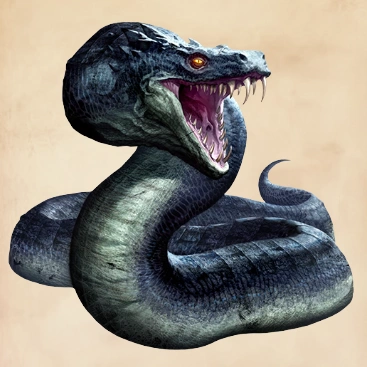
The bad guy takes the form of a basilick, which is the king of serpents in this fantasy.  The basilick kills you by looking at you in the eye.  But don't worry.  Harry Potter has many more books in the series, so you know he wins in the end.  So I'm not telling you any spoilers.

Anyway, I had a hard time sleeping last night.  I kept having nightmares of snakes.  (How do children read it?)

Sunday, July 28, 2019

Too Preachy

So I'm the only one in the world who doesn't like "Lift Up Your Heart," by Fulton J. Sheen.  Sorry.

I chose this book to read for Lent.  That was five months ago!!!  I'm sorry I wasn't that into it.  I found it dated.  I often wished the good bishop were present with me so I could argue a point, or present a different view.  I ended up not reading but rather skimming along and stopping to read what interested me.

I remembered him on TV.  My family never watched him.  Whatever was on the other channel, that's what we watched.  He didn't interest us as a family and I still aren't interested.  Sorry.

Saturday, July 27, 2019

ZNH

You are never too old to learn.  Today at Mass I learned about zananiah.  The gospel was the parable about the weeds. Matthew 13:
24-30.  The homilist explained that the weeds that were sown were particularly insidious because they look like wheat for 2/3 of its growth.  This wheat in early Hebrew was called zananiah.

Naming this weed zananiah is interesting.  In Hebrew it is ZNH. 

References in periodicals archive?
The vanishing Hebrew harlot; the adventures of the Hebrew stem ZNH.
The Hebrew stem ZNH (as translated into the Latin alphabet) has a generally accepted lexical meaning of "commit fornication, be/act as a harlot.

In other words, it had the equivalent of F#*! You.  Interesting that it was used by the enemy of the sower.

Friday, July 26, 2019

Scriptio Continua

By late antique copyist - late antique manuscript, Public Domain, https://commons.wikimedia.org/w/index.php?curid=15074137
This morning at Mass, Father explained that early scripture was written with the words all smashed together.  There were no spaces, no punctuation, no paragraphs.  All these rules were added to make readers able to read.  Wiki explains:

Before (and after) the advent of the codex (book), Latin and Greek script was written on scrolls by enslaved scribes. The role of the scribe was to simply record everything he or she heard, in order to create documentation. Because speech is continuous there was no need to add spaces. Typically, the reader of the text was a trained performer, who would have already memorized the content and breaks of the script. During these reading performances, the scroll acted as a cue sheet, and therefore did not require in-depth reading.
While the lack of word parsing forced the reader to distinguish elements of the script without a visual aid, it also presented him with more freedom to interpret the text. The reader had the liberty to insert pauses and dictate tone, making the act of reading a significantly more subjective activity than it is today. However, the lack of spacing also led to some ambiguity because a minor discrepancy in word parsing could give the text a different meaning. For example, a phrase written in scriptio continua as collectamexiliopubem may be interpreted as collectam ex Ilio pubem, meaning "a people gathered from Troy", or collectam exilio pubem, "a people gathered for exile". Thus, readers had to be much more cognizant of the context to which the text referred.

.......

 Though paleographers disagree about the chronological decline of scriptio continua throughout the world, it is generally accepted that the addition of spaces first appeared in Irish and Anglo-Saxon Bibles and Gospels from the seventh and eighth centuries.[7]:21 Subsequently, an increasing number of European texts adopted conventional spacing, and within the thirteenth and fourteenth centuries, all European texts were written with word separation.[7]:120-121

Wednesday, July 24, 2019

Non-pulsed or Non-plussed

All these years I've been using non-pulsed for non-plussed.  "Pluss" doesn't make sense to me. 

If a shrieking noise makes everyone jump, except me.  My pulse didn't skip a beat.  Aren't I non-pulsed?

or

Non-plussed?

Monday, July 22, 2019

Marsh Girl

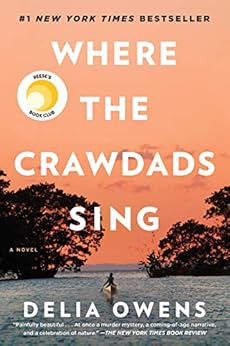
Where the Crawdads Sing by Delia Owens begins so sadly that I cried for the little girl.  The girl is Kya or Catherine.  She is abandoned by everyone. Literally.  Everyone she loves leaves her.

This thought did lead me to contemplation.  Doesn't everything leave, eventually?  And that includes us leaving others too.  It's part of life.

There are happy moments too and it does end happily.  Kya grows up and falls in love, a couple of times.  Her rough beginnings mold her into a self-sufficient, strong woman.

It has a surprise ending.  You will still enjoy the book.

I have a question for those who have read the book.  Near the end, the police pick up Tate.  Why?  Did I miss it?  The next chapter goes on as if Tate wasn't picked up by the sheriff.  What happened?

AI = Seeds

 Can you explain how a seed germinates?  I don't mean adding water and sunlight.  I mean what is inside the seed that makes it start to ...