You have no idea how many times I've gone by statues of St. Francis and wished I had paint with me to change Francis' habit to Dominican white and his skin to brown.
Search This Blog
Monday, April 29, 2019
Pope to hairdressers: Cut the gossip, highlight politeness
You have no idea how many times I've gone by statues of St. Francis and wished I had paint with me to change Francis' habit to Dominican white and his skin to brown.
Friday, April 26, 2019
Solitary Confinement = Torture
The Pilot has an article about solitary confinement. https://www.thebostonpilot.com/article.asp?h=Solitary_confinement_in_U.S._prisons_qualifies_today_as_torture&utm_source=ConstantContact&utm_medium=email&utm_campaign=Dailynewsletter&ID=184914
I know inmates who haven't broken any rules and are put in solitary confinement. It's for their own protection. The usual reason is that a gang has marked him for execution.
Yeah. It's a different world.
But one of my "cloistered brothers" was in and out of the "hole" because he kept mouthing off. He was a thorn in the prison administration's side. He considered solitary confinement as a retreat. He was allowed to bring in his Divine Office. So he spent his time, praying, contemplating, and exercising. He always emerged stronger
--spiritually and physically.
I know inmates who haven't broken any rules and are put in solitary confinement. It's for their own protection. The usual reason is that a gang has marked him for execution.
Yeah. It's a different world.
But one of my "cloistered brothers" was in and out of the "hole" because he kept mouthing off. He was a thorn in the prison administration's side. He considered solitary confinement as a retreat. He was allowed to bring in his Divine Office. So he spent his time, praying, contemplating, and exercising. He always emerged stronger
--spiritually and physically.
Monday, April 22, 2019
Poetry in the Wilderness
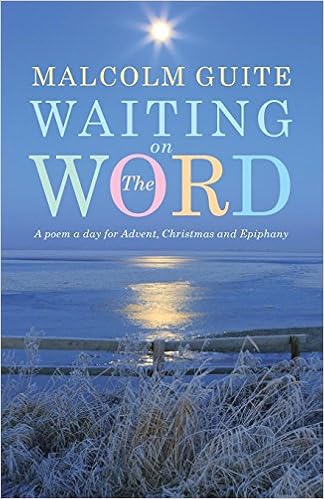
Malcolm Guite's The Word in the Wilderness led me through Lent with a Poem a Day for Lent and Easter with reflection, every day.I know my Lenten reading was three books, but I was only successful with this one. I'm still pushing myself to read the other two. This one I looked forward to reading, every day.
Malcolm Guite is a poet that makes you savor your thoughts. Every day was Lectio Divina. And if I didn't get the poem, Guite explains each poem.
Another thing about this book is that it is an anthology. I wasn't stuck reading a poet I didn't like, every day. The Word in the Wilderness had different poets. Each one was apropos, though. It was one of the best Lenten Journeys I've ever experienced.
Sunday, April 21, 2019
Oh So Very Human
Lectio:
Good Friday by Christina Rossetti
Am I a stone, and not a sheep,
That I can stand, O Christ, beneath Thy cross,
To number drop by drop Thy blood’s slow loss,
And yet not weep?
Good Friday by Christina Rossetti
Am I a stone, and not a sheep,That I can stand, O Christ, beneath Thy cross,
To number drop by drop Thy blood’s slow loss,
And yet not weep?
Not so those women loved
Who with exceeding grief lamented Thee;
Not so fallen Peter, weeping bitterly;
Not so the thief was moved;
Who with exceeding grief lamented Thee;
Not so fallen Peter, weeping bitterly;
Not so the thief was moved;
Not so the Sun and Moon
Which hid their faces in a starless sky,
A horror of great darkness at broad noon –
I, only I.
Which hid their faces in a starless sky,
A horror of great darkness at broad noon –
I, only I.
Yet give not o’er,
But seek Thy sheep, true Shepherd of the flock;
Greater than Moses, turn and look once more
And smite a rock.
But seek Thy sheep, true Shepherd of the flock;
Greater than Moses, turn and look once more
And smite a rock.
Studium:
Christina Rossetti lived in the nineteenth century. This poem was published in 1866. Here, Rossetti is describing something very human. "Doubt." Sometimes we feel close to God and sometimes we don't. And when we don't, we miss Him. This is what Christina is experiencing. As usual, the feeling, the mood, whatever, passes, as it does with Christina Rossetti. But this poem is focusing on the "doubt."
Meditatio:
This poem is perfect for the discussion my "cloistered brothers" and I were having. One of them was describing his thoughts about God. He lost his "joy" in Jesus. Thank you Lord for bring this poem to my attention. I'll make copies for all of my "cloistered brothers" and we'll analyze it.
Oratio:
Lord, I ask your help in reaching my "cloistered brothers." They, everyone for that matter, want to feel Your love. But being human, that closeness with human beings comes and goes. We don't want to feel like Christina's stone. We want to be humbled like Peter, cry like the women beneath Your cross. We want to feel the earth move.
Contemplatio:
Smite with Your Love, Lord.
Resolutio:
I will print out and give copies of this poem to my "cloistered brothers."
Friday, April 19, 2019
Good Friday for Jean
On this Good Friday, I learned that Jean Vanier, the founder of L'Arche communities has had a heart attack and has been moved to hospice care. He is 90 years old. Good Friday is a good day to die.
The resurrection is coming, Jean. May God welcome this good man.
Jean Vanier gave up a promising career as a philosopher and theologian. While he was studying, which as an academic, he always was, he ran into L'Eau Vive, a spiritual center in Soisy-sur-seine, founded by Father Thomas Philippe, O.P. They became friends and eventually Vanier founded L'Arche, a small home which he shared with two mentally disabled men.
Later, Vanier, with Marie-Helene Mathieu started another community for people with developmental disabilities, "Faith and Light."
Wikipedia tells me that he wrote 30 books and received many honors.
What's your definition of a saint?
When Jean turned 90 he made a video giving his 10 rules for Life. My favorite is # 5 but then I read # 8 and # 10. I guess I like them all.
1. Accept the reality of your body
Vanier says, “For a man to become a man he has to be at ease with his body. That body is fragile, like all bodies. We are born in weakness (as a little child); we will die in weakness. And when we get to a certain age – ninety – we begin to get weaker.” He adds, “I have to accept that I’m ninety. I’m not fifty, or forty, or thirty.”
2. Talk about your emotions and difficulties
He acknowledges that men in particular “have difficulty expressing their emotions.”
3. Don’t be afraid of not being successful
Vanier adds, “you have to discover you are beautiful as you are” regardless of whether or not you are successful.
4. In a relationship, take the time to ask “How are you?”
“Has he married his success in work, or has he married his wife? What is the most important? Is it to grow up the ladder in promotion?” asks Vanier.
5. Stop looking at your phone. Be present!
To young people he says, “You are people of communication.” But then he asks, “Are you people of presence? Are you able to listen?” "To be human is to know how to relate," he adds.
6. Ask people “What is your story?”
Vanier emphasizes the importance of relating to people and listening to them. He says, “To meet is to listen: Tell me your story? Tell me where your pain is? Tell me where your heart is? What are the things you desire?” He adds, “I need to listen to you because your story is different to my story.”
7. Be aware of your own story
“You are precious. You have your ideas: political, religious, non-religious, you have your vision for the world. Your vision for yourself,” says Vanier. He acknowledges that when we fear our identities, worldviews, and cherished opinions are being taken away from us we are liable to become angry. He adds, “we have to discover where our fears are because that is the fundamental problem.” He asks, “Maybe in your story there is a story about fear?”
8. Stop prejudice: meet people
Vanier says, “The big thing about being human is to meet people.” We need to “meet people who are different” and “discover that the other person is beautiful.”
9. Listen to your deepest desire and listen to it
Vanier says, “We are very different from birds and dogs. Animals are very different.” He says that unlike with animals there is a “sort of cry of the infinite within us. We’re not satisfied with the finite.” He asks, “Where is your greatest desire?”
10. Remember that you'll die one day
“I’m not the one who’s the king of the world and I’m certainly not God,” says Vanier. “I’m just somebody who was born ninety years ago and will die in a few years time and then everybody will have forgotten me. This is reality. We’re all here, but we are just local people, passengers in a journey. We get into the train, we get out of the train, the train goes on.”has to be at ease with his body. That body is fragile, like all bodies. We are born in weakness (as a little child); we will die in weakness. And when we get to a certain age – ninety – we begin to get weaker.” He adds, “I have to accept that I’m ninety. I’m not fifty, or forty, or thirty.”
Thursday, April 18, 2019
There's a Tie for # 1
The Mass of Easter Day

Lectio:
Reading 1ACTS 10:34A, 37-43
Peter proceeded to speak and said:
"You know what has happened all over Judea,
beginning in Galilee after the baptism
that John preached,
how God anointed Jesus of Nazareth
with the Holy Spirit and power.
He went about doing good
and healing all those oppressed by the devil,
for God was with him.
We are witnesses of all that he did
both in the country of the Jews and in Jerusalem.
They put him to death by hanging him on a tree.
This man God raised on the third day and granted that he be visible,
not to all the people, but to us,
the witnesses chosen by God in advance,
who ate and drank with him after he rose from the dead.
He commissioned us to preach to the people
and testify that he is the one appointed by God
as judge of the living and the dead.
To him all the prophets bear witness,
that everyone who believes in him
will receive forgiveness of sins through his name."
"You know what has happened all over Judea,
beginning in Galilee after the baptism
that John preached,
how God anointed Jesus of Nazareth
with the Holy Spirit and power.
He went about doing good
and healing all those oppressed by the devil,
for God was with him.
We are witnesses of all that he did
both in the country of the Jews and in Jerusalem.
They put him to death by hanging him on a tree.
This man God raised on the third day and granted that he be visible,
not to all the people, but to us,
the witnesses chosen by God in advance,
who ate and drank with him after he rose from the dead.
He commissioned us to preach to the people
and testify that he is the one appointed by God
as judge of the living and the dead.
To him all the prophets bear witness,
that everyone who believes in him
will receive forgiveness of sins through his name."
Studium:
This is a speech. "Holy Spirit and power," are to be noted. Jesus called upon the Holy Spirit for help, for healing, strength, and in exorcisms. Peter is telling us that he, personally was there as a witness. This speech was given on the occasion of Cornelius' Baptism. During this speech, the Holy Spirit falls on everyone present. The Jews are surprised that the Holy Spirit is falling on non-Jews. Peter explains that Jesus' message was first sent to Israel and then to everyone. The message is universal. Forgiveness reaches everyone.
Meditatio:
The followers of Jesus the Nazarene must have lost their hope upon seeing Jesus crucified. Think about how death affects us, nevermind One whom you thought was the Messiah. But they weren't listening. Jesus told them this would happen. It was also predicted.
Am I this dense, too? I need to pay attention to signs and scripture.
Oratio:
Holy Spirit enlighten my understanding. I want to grow closer to God. Direct me all the way.
Contemplatio:
Jesus loves us all.
Resolutio:
To love everyone as Jesus loves us.
Wednesday, April 17, 2019
Traditions are Important
Quite a while ago, a friend made a remark that I have carried with me and wrestled with to find an acceptable response. She grew up Catholic but left the Church and is now Universalist. She did not bring up her children in any religion because she felt they should choose their own. The remark she threw out that left me befuddled was "Traditions are bad. They keep you stuck in the past."
I was silent. Ever since, I have been searching for a good explanation to explain that traditions are important. This morning I read something in The Bible Companion, that is a help towards my understanding of tradition. Father Ronald D. Witherup, p.s.s., in quoting Elie Wiesel's The Gates of the Forest says:
When the great Rabbi Israel Baal Shem-Tov saw misfortune threatening the Jews, it was his custom to go into a certain part of the forest to meditate. There he would light a fire, say a special prayer, and the miracle would be accomplished and the misfortune averted. Later, when his disciple, the celebrated Magid of Mezeritch, had occasion, for the same reason, to intercede with heaven, he would go to the same place in the forest and say, "Master of the Universe, listen! I do not know how to light the fire, but I am still able to recite the prayer." And again the miracle would be accomplished. Still later, Rabbi Moshe-Leib of Sassov, in order to save his people once more, would go into the forest and say, "I do not know how to light the fire, I do not know the prayer, but I know the place and this must be sufficient." It was sufficient, and the miracle was accomplished. Then it fell to Rabbi Israel of Rizhin to overcome misfortune. Sitting in his armchair, his head in his hand, he spoke to God: "I cannot even find the place in the forest. All I can do is to tell the story, and this must be sufficient." And. it was sufficient. God created man because he loves stories!
Traditions are carried down through the ages by oral stories, written stories, and edited stories. But they tell the story recounted generation after generation of what is important, whether in relation to God, as the tale above, or in a family, as in my family's turkey stuffing recipe, or in a community, as the rituals Bostonians go through for their baseball team, the Red Sox. Traditions are historical records to pass on to succeeding generations.
As Elie Wiesel's story illustrates, traditions are adapted, but the point is the point. So my friend is correct in saying that traditions hold you back. They can if they are not adapted. Traditions are important but times change: sometimes the Red Sox win and the traditional removal of the Bambino's curse is not needed. And my family complaints that the turkey stuffing has too many calories and not edible for the vegans in the family make me look for adaptions to the recipe. And biblical and church teachings grow in understanding and may have to be interpreted for different times. But the values that our traditions teach us remain.
I was silent. Ever since, I have been searching for a good explanation to explain that traditions are important. This morning I read something in The Bible Companion, that is a help towards my understanding of tradition. Father Ronald D. Witherup, p.s.s., in quoting Elie Wiesel's The Gates of the Forest says:
When the great Rabbi Israel Baal Shem-Tov saw misfortune threatening the Jews, it was his custom to go into a certain part of the forest to meditate. There he would light a fire, say a special prayer, and the miracle would be accomplished and the misfortune averted. Later, when his disciple, the celebrated Magid of Mezeritch, had occasion, for the same reason, to intercede with heaven, he would go to the same place in the forest and say, "Master of the Universe, listen! I do not know how to light the fire, but I am still able to recite the prayer." And again the miracle would be accomplished. Still later, Rabbi Moshe-Leib of Sassov, in order to save his people once more, would go into the forest and say, "I do not know how to light the fire, I do not know the prayer, but I know the place and this must be sufficient." It was sufficient, and the miracle was accomplished. Then it fell to Rabbi Israel of Rizhin to overcome misfortune. Sitting in his armchair, his head in his hand, he spoke to God: "I cannot even find the place in the forest. All I can do is to tell the story, and this must be sufficient." And. it was sufficient. God created man because he loves stories!Traditions are carried down through the ages by oral stories, written stories, and edited stories. But they tell the story recounted generation after generation of what is important, whether in relation to God, as the tale above, or in a family, as in my family's turkey stuffing recipe, or in a community, as the rituals Bostonians go through for their baseball team, the Red Sox. Traditions are historical records to pass on to succeeding generations.
As Elie Wiesel's story illustrates, traditions are adapted, but the point is the point. So my friend is correct in saying that traditions hold you back. They can if they are not adapted. Traditions are important but times change: sometimes the Red Sox win and the traditional removal of the Bambino's curse is not needed. And my family complaints that the turkey stuffing has too many calories and not edible for the vegans in the family make me look for adaptions to the recipe. And biblical and church teachings grow in understanding and may have to be interpreted for different times. But the values that our traditions teach us remain.
Subscribe to:
Posts (Atom)
Reminiscing
My sister died a month ago. A sibling dying is not an inconsequential event, for anyone. For me, it was deep. You see, she was ten years...
-
St Dominic and the Devil by Pietro della Vecchia D Don't you just love legends? I mean stories. St. Dominic stories abound. Of cou...
-
Yesterday, I posted about a sculpture on the top of a column in the church of St. Mary Magdalen , in Vezelay, France . Meditating upon the...
-
My Lay Dominican Chapter, Our Lady of Mercy, has the best spiritual director. Today he gave us, what my "cloistered brothers" ca...