Search This Blog

Friday, November 10, 2023

A Sororal Custom

My sister is ten years older than I.  She always liked to color, even now.  Aren’t we lucky that today adult coloring is considered a good stress reliever?  She still colors.

But I’m thinking back a few years—as far back as the 1950’s.  My sister and I are young.  I could have been 5 or 6 and she is 15 and 16.  It’s Christmas and we always received the usual pajamas and underwear, socks, and always a surprise, or two.  Even though the pajamas, socks, and underwear weren’t a surprise, it was nice to see what new designs and colors they were.  Another sure gift was a coloring book and a new box of crayons.  My sister


may have been given paints and a coloring book for teenagers, but our anticipation of them heightened the reception of the new gifts.

Yes, coloring was and is fun, but the best part is yet to come.

Our Christmas trees were always real. However, the Christmas tree stand wasn’t a stand.  It was a pail with rocks in it.  The trunk of the tree was fitted securely into the middle of the rocks.  It was my job to water the tree to keep it fresh, by making sure the pail always had water.  My sister wrapped Christmas paper around the pail to make it look like a present.

We decorated the tree nicely.  We always had plenty of tinsel and we wrapped angel hair around as many light bulbs that we could.  I think we had the prettiest tree on the street. 

The best part is coming. My memory, one of my favorite memories, is Christmas night.

We put on our new Christmas pajamas and socks.  We got out our new coloring books and crayons and paints. We shut off all the lights in the house, except the Christmas tree lights.   Then we flattened ourselves onto our tummies and crawled under the Christmas tree.

And we colored.

There, under the tree lights, my sister and I, and no one else in the whole wide world knew where we were or what we were doing.  It was just us, doing our sisterly tradition.

It was magical.

Wednesday, November 8, 2023

NO!


LECTIO:              2 Sm 7:1-5, 8b-12, 14a, 16

When King David was settled in his palace,
and the LORD had given him rest from his enemies on every side,
he said to Nathan the prophet,
"Here I am living in a house of cedar,
while the ark of God dwells in a tent!"
Nathan answered the king,
"Go, do whatever you have in mind,
for the LORD is with you."
But that night the LORD spoke to Nathan and said:
"Go, tell my servant David, 'Thus says the LORD:
Should you build me a house to dwell in?'

"It was I who took you from the pasture
and from the care of the flock
to be commander of my people Israel.
I have been with you wherever you went,
and I have destroyed all your enemies before you.
And I will make you famous like the great ones of the earth.
I will fix a place for my people Israel;
I will plant them so that they may dwell in their place
without further disturbance.
Neither shall the wicked continue to afflict them as they did of old,
since the time I first appointed judges over my people Israel.
I will give you rest from all your enemies.
The LORD also reveals to you
that he will establish a house for you.
And when your time comes and you rest with your ancestors,
I will raise up your heir after you, sprung from your loins,
and I will make his kingdom firm.
I will be a father to him,
and he shall be a son to me.
Your house and your kingdom shall endure forever before me;
your throne shall stand firm forever."

STUDIUM:

This reading recalls God's covenant with David--promising to carry on his line, forever.  Jesus is the fulfillment of this promise.  This is the first time the prophet Nathan is mentioned.  Prophets communicated God's plans to the kings.  Many kings rejected the plans but God still sent prophets.  In these verses, God is saying that He doesn't want David to build Him a house.  David accepted God's "no."  Note that David's request was good, but God said "no."

MEDITATIO:

Why didn't God want David to build a house for Him?  God never gave a reason.  David's son, Solomon builds the house.  
    The important lesson for me is that God sometimes says, "no," even when the request is a good one.  I need to accept God's plans, like David. God gives us other things.  David was promised a dynasty.  Jesus is a Son of David.*

ORATIO:

Lord, give me understanding and wisdom to accept Your "no's," to me. I need to remember that when You say "no," we will get something better.

CONTEMPLATIO:

May Your Will be mine.

RESOLUTIO:

For ever I will sing the goodness of the Lord.


                                              Rembrandt

Tuesday, November 7, 2023

the Tucum Ring


The story of the tucum ring is interesting.  The ring means you are in solidarity with the poor.  The origin of this ring dates 15-16th century.

The legend around the ring highlights a bishop who in a meeting with the leaders of the Tapirapé people, an autochthonous tribe in Brazil, was awed by their faith and resilience. He asked for their forgiveness for the way his people had treated their people. More important, he asked forgiveness for the church’s complicity in oppressing their people over the centuries.

The bishop removed his gold ring, the symbol of his liturgical office, and presented the ring to the leader of the community, saying something to the effect of “Though we cannot return all the gold we’ve plundered or restore all the lives we destroyed, we long to try to make things right. Take this ring as a symbol of my desire for what the church will be—no longer taking but giving.”

The Tapirapé chief accepted the ring and reciprocated the bishop’s gesture by removing his black tucum ring and giving it to the church leader as a symbol of their forgiveness and in celebration of their newfound solidarity.

From that moment onward, the bishop wore that tucum ring as the sign of his ecclesial office.

 It is made from the fruit of the tucum palm tree in Brazil.  Nowadays, people who are in sympathy with the poor in South American, wear the ring.


A Time of Disaster and Violence

 Today is Tuesday in the Thirty-First Week in Ordinary Time. The first morning reading is from the first book of Maccabees. 

The Maccabees was the name of a family. They lived and were prominent in the city of Modein—a little north of Jerusalem. They kept to themselves being kosher in a time when the king and the people practiced pagan sacrifices. Their leader, Mattathias, couldn’t take any more of the pagan worship,  and warred against the king and his followers. The reading quotes Mattathias:

Arrogance and scorn have now grown strong; it is a time of disaster and violent anger…

This quote fits Israel, today. Hamas was arrogant and scornful enough to attack Israel. Israel is defending itself causing much anger and disaster. 

No matter the times, people don't change.


Monday, November 6, 2023

Telling the Pope Where to Go

 Louis de Wohl's Lay Siege to Heaven is historical saint fiction about St. Catherine of Siena.  It's a fictional account of her life.  All the stories, the bits and pieces that I've picked up, here and there, are pulled together quite nicely.

Catherine lived in a time of toxic political scheming and discord. Italy did not exist, at that time.  The cities were like separate countries and always warring against each other.  It wasn't even safe for the pope to live in Rome.  During Catherine's time, the pope lived in Avignon, France.

Catherine felt called to live the life of a consecrated virgin.  She did not enter the convent and it was a good thing she didn't.  She would never have been free enough to do what she did.

She roamed here and there, to help people.  She helped out in hospitals and visited prisons to bring the love and mercy to prisoners.  She wrote letters to the various princes who wanted to war against other cities.  Her letters to the pope helped convince him to return to Rome.

Somewhere she learned to read.  The book says God taught her.  But she wasn't schooled, yet she dictated letters.  She wrote The Dialogue; God's conversations with her. 

She received the stigmata, but requested that the visible signs of this gift, not be shown.  She didn't want the publicity.  

Many people read Louis de Wohl's books on different saints.  Now, I can see why.  The story is easy to read and very understandable.  


Sunday, November 5, 2023

Where is God?

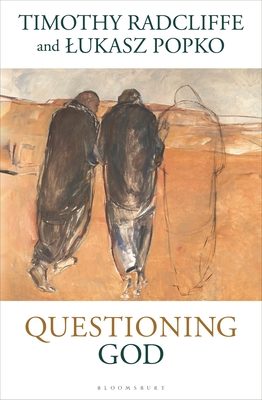
 The discussion with my "cloistered brothers" centered on Timothy Radcliffe's new book, Questioning God.  This is Father Radcliffe's latest book.  It is a discussion between two theologians: Timothy Radcliffe and Lukasz Popko.  Both are Dominican priests.  

We didn't get very far, because we were hung up with our own opinions.  Radcliffe points out that the first words recorded that God speaks in Genesis is "Where are you?"  (Genesis 3: 9)  My brothers laughed at that because we humans are always crying out to God, "Where are You?" Even Jesus asks that very same question, (Mark 15: 34)

We decided that the questions weren't meant to ask for a location, but rather disposition.  Both humans and Jesus on the cross, were asking for a feeling, or assurance, that God was present.  Intellectually, we know that God is omnipresent but it takes a minute or so to have the presence of mind to trust God.

Jesus dying on the cross is the perfect example.  He would have been resurrected, if He didn't die first.  We must trust Him.

Where is God?  He's waiting for us to prove our faith.


Saturday, November 4, 2023

Why the Cross is Backward


If you look at the procession of these friars, during the recitation of the Rosary, you'll notice that the cross is backwards.  I understand that this is a Dominican tradition.  Back in the day, when Bishops were the only ones allowed to preach, the Bishop's cross led processions.  When the Bishop wasn't present, the cross was backwards.

Reminiscing

 My sister died a month ago.  A sibling dying is not an inconsequential event, for anyone.  For me, it was deep.  You see, she was ten years...