Don't go by my judgement in giving "The Thought of Pope Benedict XVI" by Aidan Nichols, op, four stars. I'm a simple old lady, a lay person, with no theological background. With that in mind, there is no way that I understood all that Benedict XVI was teaching, or what Father Nichols was explaining. What I got, I enjoyed. I took my time and grasped the general account of Benedict's thinking. I now understand Benedict's times--his background and a sense of the historical formation that trained his feelings, understandings, and writings.
This is a book of Benedict XVI's writings. Father Nichols situates his thoughts with the historical times. I enjoyed Nichol's presentation of this historical pope. Anyone who wants to understand Benedict should read this book, like I did--carefully.Wednesday, February 15, 2023


Monday, February 13, 2023
Patron of Vengeance
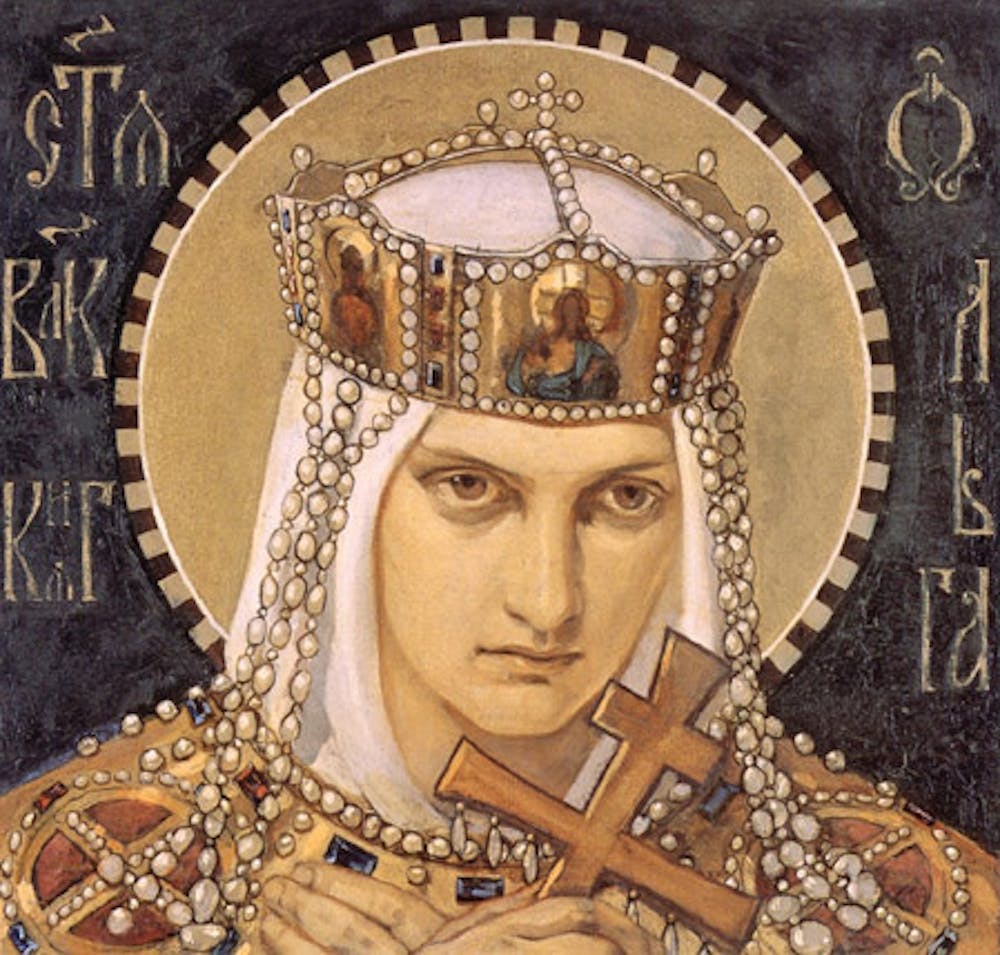
St. Olga is the patron saint of Ukraine and vengeance. By vengeance, I mean those who want to reap vengeance, not that they do, but that they feel like it. You see, Olga was a young mother when her husband was brutally murdered. She took vengeance double even triple. But that was all before her conversion to Christianity. She turned her life and heart around when she fell in love with Jesus. Thus she is patron of widows, converts, Ukraine, and those who feel vengeance consuming them.
BTW, her grandson was Vladimir, who some say Putin is trying to emulate.
Sunday, February 12, 2023
Attitude Toward Others
Father Martin told us an interesting story today. When he was in the seminary, there was a deacon who was very arrogant. Father Martin used to pay deference to him in an exaggerated manner and the proud peacock would preen. He didn't know that Father Martin was really making fun of him.
One day, Martin's spiritual director came to his room to talk. He said that the deacon was close to a nervous breakdown because of Martin's behavior towards him. Martin defended himself by saying that that he does nothing disrespectful, on the contrary he has only shown him the most respect. The spiritual director agreed but told Martin that he needed to apologize and become friends.
Apologize? Apologize!
Why? Because of Mathew 5: 24-25.
If you bring your gift to the altar, and there recall that your brother has anything against you, leave your gift there at the altar, and first be reconciled with your brother, and then come and offer your gift.
Note: your brother has anything against you. Not that you have anything against your brother!
It took every ounce of discipline for Father Martin to seek out that deacon and apologize and try to be friends with him.
Why did Martin's spiritual director require him to do this? Broken relationships hinder our relationship with God. Our attitudes towards others reflect our relationship with God.

Father Martin A. Hyatt
Saturday, February 11, 2023
Golden Legend
The Golden Legend was a medieval book of saints. Jacobus de Voragine wrote it about 1260. From 1470 to 1530 it was the most popular book, next to the Bible, in Europe.
It can be read today. Internet History Sourcebooks: Medieval Sourcebook (fordham.edu)

St. George
My friend Jordi, wears this medal of St. Jordi or George, since he was a fetus. His pregnant mother intuited that he was going to be a boy and that she was going to name him, Jordi (They're Spanish).

Note that the saint has a lance and rides a horse. I originally thought this was St. Michael the Archangel but Jordi pointed out that Michael doesn't ride a horse and carry a lance. But both saints fight evil. Faith wins over evil.
St. George existed in the third century and was a soldier. There are many legendary stories told about him and a surprising number of countries and cities have him as their patron. Here are a few--there're more.
England,
Portugal,
Greece,
Georgia,
Catalonia,
Ethiopia,
Venice,
Genoa,
St. George, Utah
As a warrior, St. George has been the favorite name to honor valor. England has the cross of St. George and so does Russia.

Wednesday, February 8, 2023
Geocaching and Letterboxing

Geocaching is a game. Under the rock is the next location gamers have to look for. It is usually some kind of coordinates like longitude and latitude.
Letterboxing is a notebook and pen hidden for walkers to see and write down their names and dates. Today while walking, we found this letterbox.


Subscribe to:
Posts (Atom)
Rabbi
Did you ever wonder why a simple carpenter was called Rabbi? A rabbi is a teacher, a master in spiritual things. And it wasn't just H...

-
 St Dominic and the Devil by Pietro della Vecchia D Don't you just love legends? I mean stories. St. Dominic stories abound. Of cou...
-
Yesterday, I posted about a sculpture on the top of a column in the church of St. Mary Magdalen , in Vezelay, France . Meditating upon the...
-
 My Lay Dominican Chapter, Our Lady of Mercy, has the best spiritual director. Today he gave us, what my "cloistered brothers" ca...
