All I could think of when I finished reading Pretty Dead Things by Lillian West was the Mattis Law. This is a law in Massachusetts where prisoners who committed their crimes when they were under 21, will have their case reevaluated.
My heart often broke when I talked to some of my "cloistered brothers," who had committed murder when they were 18 or 19. They were now in their 50-60s. They certainly weren't the same kids they were then. What a waste of life! They could be useful in society, if given a chance.
This review of Pretty Dead Things is a big spoiler alert. Sorry. This is not really a book review, but rather a critique of the judgement the story places on a 16-year-old.
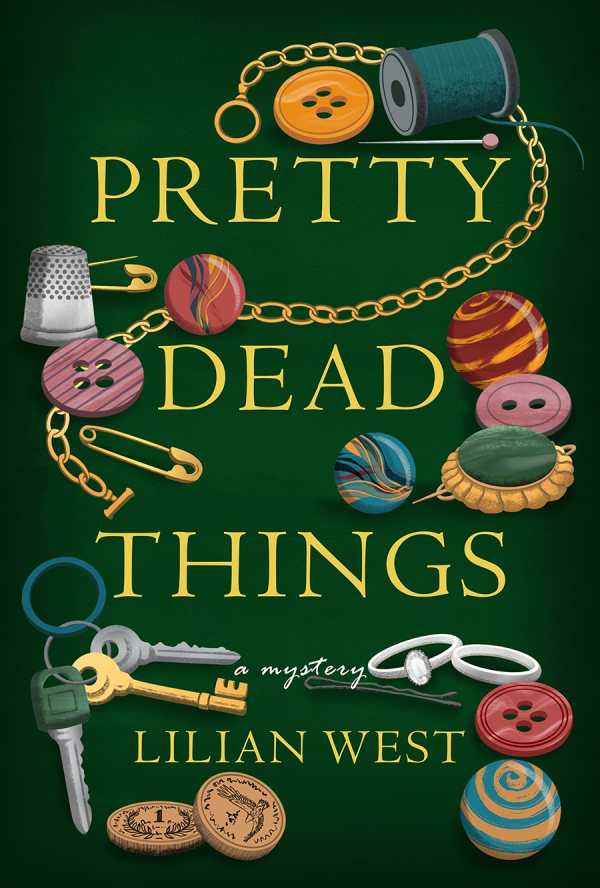
The story begins with Cora and Elliot planning their wedding. Cora happened to buy a jar of junk, at an estate style. The jar contained baubles, i.e., buttons, earrings, pins, marbles, AND two rings--a wedding ring set.
The story is about Cora tracing the engraved initials in the ring, to its owner. In doing so, she finds that the owner, Clarity, disappeared one day. Clarity wasn't accepted by the town and led a strange life. Her husband was married before and left his first wife and daughter for Clarity. Here I blame the husband. He was married and should never have allowed himself to become involved with Clarity. Mind you, he was not only leaving his wife, but he was also leaving his daughter, Beverly.
The author describes Lewis as a kind, and gentle soul, who would never hurt anyone. He was a victim of love. He couldn't help himself falling in love with Clarity.
Bull S###!
He destroyed two people's lives: his wife's and daughter's!
Lewis leaves his family, divorces first wife and marries Clarity (hence the rings). Lillian West, the author, tries to convince the readers of Lewis' good intentions. He's a good father to his daughter, Beverly. Not much is mentioned of how the wife takes it. How would you?
Clarity and Lewis have a daughter, Hazel. That makes Beverly and Hazel, sisters. Life goes on. Clarity and Lewis are happy. Not so much Beverly and the scorned first wife. Beverly loves her father, Lewis, but her mother's tears are upsetting. Beverly's homelife was destroyed by her father's marriage to Clarity.
If only Clarity wasn't in the picture, then Lewis would come back to Beverly's mother and life would go on, as it should have. This idea stewed in Beverly's mind.
The idea was realized when Beverly was 16. She took the chance to kill Clarity and buried her body. And her wish came true. Lewis remarried Beverly's mother, his first wife, and their life continued as best as it could.
Now Cora find's Clarity's wedding ring. The search for what happened to the ring's owner results in finding Clarity's skeleton, buried by Beverly. Beverly is caught and damned.
My question is, should she be?
If Beverly were in Massachusetts, and had served her life sentence, admirably for 20+ years, her case would be looked at. She might be given the chance to finish her life sentence, outside (not in prison). This doesn't mean that she was "scott free." Depending on the circumstances, she may have to wear a monitoring bracelet, for the rest of her life. She can't leave the state. She can't leave her home without her parole officer's permission. IOW, she's under house arrest for the rest of her life. The parole board would decide on the conditions of Beverly's release. This is the Mattis Law, as I understand it.
How do you judge Beverly? At 16, I would become enraged if someone stole by boyfriend, never mind my father! I hated many girls, for many reasons. I had many negative opinions that I grew out of. I looked at life in black and white. It's only by the grace of God that I never committed murder.
Of course, Pretty Dead Things, is only fiction. As I said, I couldn't help but relate the story to a few "cloistered brothers", that I know. The novel it home. There but for the grace of God, go I.


No comments:
Post a Comment