Search This Blog

Tuesday, April 29, 2025

CCC 2510

 I've wasted a little time wondering what I would do if the Gestapo came to my house looking for Jews.  It's a given that I would be hiding a Jewish family.  How do I mislead the Nazis without telling a lie? It's silly; I know.  But such is the moral dilemmas I occasionally put myself through. 

The Catechism of the Catholic Church ended this train of thought.  Deo Gratias.

CCC 2510

The golden rule helps one discern, in concrete situations, whether or not it would be appropriate to reveal the truth to someone who asks for it.

Golden Rule

Do unto others as you would like them to do unto you.


Sunday, April 27, 2025

Mercy

Today is Mercy Sunday. The homilist today told this story about Napoleon, that I made a point of remembering, so I could tell you about it.

A mother begged Napoleon to have mercy on her son.  This was his second offense, so Napoleon said that he didn't deserve it.  Justice demanded the death penalty.

The mother said that she wasn't looking for justice.  She begged for mercy.

Napoleon said, "He doesn't deserve it."

That mother said, "It wouldn't be mercy if he deserved it."

I wondered if the son was spared.  This afternoon, I tried to find this story.  It was easier.  I found it in Preaching Today.

Napoleon had mercy on the son.


Tuesday, April 22, 2025

Show Don't Tell

 I am working on objective correlatives.  An objective correlative is a literary theory used to explain how symbolic language evokes an understanding that is deeper, than using the obvious words.  For example, one could say Lady Macbeth felt guilty, rather than Lady Macbeth’s frantic washing of invisible blood off her hands. In other words, objective correlatives show, not tell.


The earliest place the term is  found is in the lectures of Washington Allston, a 19th century painter.  He used it to show the relation between the mind and the external world.  This idea was further developed  by George Santayana in 1900, in his book Interpretations of Poetry and Religion.  


T.S. Eliot used objective correlatives often and popularized the term.  Ezra Pound and Edgar Allan Poe, are also known to have used them. Recall Poe’s The Raven, to symbolize death and loss.  Here, listen to this stanza from Ezra Pound’s poem, The Return, about the pagan gods returning with diminished power, without telling you that these gods have lost their power:


See, they return; ah, see the tentative

Movements, and the slow feet,

The trouble in the pace and the uncertain

Wavering!


 I like using objective correlatives.  For fun, I’ve written a paragraph about an incident that happened to my husband.  First, I’ll read the stated event.  After, I’ll read the exact same incident, using objective correlatives.   

                                                ___________________


He turned on the computer and heard a strange noise.  A sign appeared, stating that federal authorities have noticed that his computer had a virus, and to call them.  He did, and all the trouble began.


                                        ____________________________


It was a windy day.  The dark clouds sped over our house, controlling the light from the sun. Hubby sat down at his computer.  Suddenly, an annoying screech erupted from the screen.  Jolted from his normal routine, he discovered a blinking notice, informing him that his computer had been compromised.  The notice also stated that they were federal authorities and had detected disturbing activity on his computer. He was advised to call them.

       Alas!  My law-abiding husband obeyed.


Monday, April 21, 2025

Ebenezer Moments

 The account of Ebenezer is found in 1 Samuel 7: 10-12. The Israelites were in a period of spiritual renewal and repentance under the leadership of Samuel. After suffering defeat at the hands of the Philistines and losing the Ark of the Covenant, the Israelites turned back to the Lord. Samuel called the people to gather at Mizpah, where they fasted, confessed their sins, and sought the Lord's favor. The term "Ebenezer" means "stone of help." IOW, God intervened and helped. 

Following divine intervention, the Israelites pursued and defeated the Philistines. In commemoration of the victory and as a perpetual reminder of God's help, Samuel set up a stone, naming it Ebenezer, saying, "Thus far the LORD has helped us" (1 Samuel 7:12). 

I recall my Ebenezer moment at a healing Mass.  What was yours?


Sunday, April 20, 2025

CCC 2434

 This morning I read the catechism # 2434, and thought of this parable.

The Parable of the Workers in the Vineyard

20 “For the kingdom of heaven is like a landowner who went out early in the morning to hire workers for his vineyard. He agreed to pay them a denarius[a] for the day and sent them into his vineyard.

“About nine in the morning he went out and saw others standing in the marketplace doing nothing. He told them, ‘You also go and work in my vineyard, and I will pay you whatever is right.’ So they went.

“He went out again about noon and about three in the afternoon and did the same thing. About five in the afternoon he went out and found still others standing around. He asked them, ‘Why have you been standing here all day long doing nothing?’

“‘Because no one has hired us,’ they answered.

“He said to them, ‘You also go and work in my vineyard.’

“When evening came, the owner of the vineyard said to his foreman, ‘Call the workers and pay them their wages, beginning with the last ones hired and going on to the first.’

“The workers who were hired about five in the afternoon came and each received a denarius. 10 So when those came who were hired first, they expected to receive more. But each one of them also received a denarius. 11 When they received it, they began to grumble against the landowner. 12 ‘These who were hired last worked only one hour,’ they said, ‘and you have made them equal to us who have borne the burden of the work and the heat of the day.’

13 “But he answered one of them, ‘I am not being unfair to you, friend. Didn’t you agree to work for a denarius? 14 Take your pay and go. I want to give the one who was hired last the same as I gave you. 15 Don’t I have the right to do what I want with my own money? Or are you envious because I am generous?’

16 “So the last will be first, and the first will be last.”

I know this parable is encouraging for those who come late to Christ, but the Catechism of the Catholic Church, in # 2434, concludes with " Agreement between the parties is not sufficient to justify morally the amount to be received in wages."

Am I not justified in serving this landowner a grievance?


Saturday, April 19, 2025

Objective Correlatives

A much used Bible.  


Lady Macbeth's hand washing.

A withered rose.

Stormy sky,

Wind blowing.


Sunday, April 13, 2025

Duck Boats and Donkeys

 That stupid grin on my face has persisted, all day.  I can't wipe it off. My pastor today was sermonizing on Jesus' triumphal entry into Jerusalem: Matthew 21, Mark 11, Luke 19, John 12.  

I found it immensely humorous.  I still do. He started by telling us how heroes were treated by a celebration, which included a parade.  Since Boston is blessed with many sports' teams that have winning seasons, we have celebratory parades, with the team paraded in duck boats, through the streets of Boston.  Back in the day (Jesus' day, to be exact), heroes were paraded on horses.  Jesus being Jesus, chose the donkey.  


Both and And

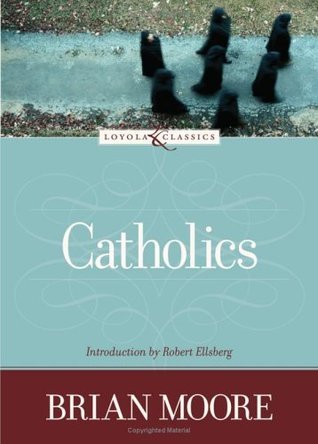
 Catholics by Brian More could be read in one sitting.  It's a short book and the story is simple.  Some monks on an island off the coast of Ireland are the only people holding on to Latin and pre-Vatican II liturgy. It is set in the future--after a Vatican IV.

Father Kinsala is sent to put a stop to the old Mass and Latin. You would think that the monks would put up a fight to keep the old ways that they love.  You would be wrong.

The monks are obedient.  Father Abbot has lost his faith. He feels he is just a manager of a corporation and Corporate has told him to change direction.  He does.  He makes the other monks obey him.

What rubbed me the wrong way was that I always thought Catholics were "both and people."  Both liturgical rites would be accommodated along with Latin. Not in this book.


Saturday, April 12, 2025

A Gothic Mystery

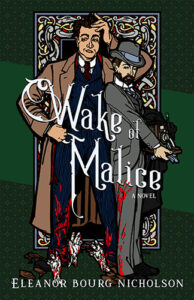
Wake of Malice by Eleanor Bourg Nicholson is a mystery that called me by name.  The story had everything I like.  The setting is Ireland, around the turn of the twentieth century. There are gypsies, priests, vampires, romance, curses, demons, and my favorite exorcist, the friar, Father Thomas Edmund Gilroy.

The story begins with journalists Hugh Buckley and Freddie Jones assigned to go to write what's happening in an Irish Village.  A priest has been accused of stealing money. He is the second to be murdred.

When Hugh and Freddy arrive, the priest is accused of murder of the man he allegedly stole from. Other murders follow, in ritual, macabre manners, suggesting demonic activity.

One odd boy is accused.  Some gypsies are locked up.  The daughter of one of the victims, is suspected.

Our hero, Father Thomas Edmund is almost murdered, but he was found before he died, by Hugh.

What I enjoy about these mysteries is they're not creepy.  There's evil but it's not drawn out to creep you out.  Besides, Father Thomas Edmund always wins.  You can't figure out who's doing the murders and is the evil one, until it's time. Wake of Malice is easy to read and enjoy.


Monday, April 7, 2025

A Humbling Process

 Being a Lector is a humbling experience.  Probably delivering a sermon or homily, is even more so.

Not only does a Lector have to sashay up the aisle in procession holding the Book of Gospels up in the air like a ring-card girl announcing what round the fighters are performing. 


but once the Lector is standing at the altar, he has to look out over a sea of faces looking back at him.   The Lector can't wonder what the people are thinking.  He has to focus on his job--getting the Word across.  But you can still see sleepy people, questioning faces, etc.  One time, a man laughed out loud at my delivery!

How's that for humbling!


Sunday, April 6, 2025

A Real Life Heroine

 Another book review: The Frozen River by Ariel Lawhon is historical fiction.  The chief protagonist is Martha Ballard, a real person who lived in Maine, 1789.  Her family is real, probably taken from a census, but the story, a mystery, a thriller, a good tale.

The setting is next to the Kennebec River.  Martha is a midwife, but does quite a bit of doctoring, too.  When the minister's wife is raped, Martha takes her side.  Surprisingly, or maybe not, for those times, the people in the village, are not too sympathetic.  Her husband was not liked, and the villagers want him out.  Unfortunately, the raped yielded a baby.  Martha delivers in more ways than one.

The frozen Kennebec also yields a frozen body--one of the rapists.  Since he was accused, no one puts too much thought into it.  Good riddance.  But Martha sees that the victim was beat-up and hung.  The clues as to the perpetrators are throughout the chapters.  

Justice does prevail and life goes on.  Ariel Lawhon writes with compassion and a sense of history.  


Saturday, April 5, 2025

Lenten Reading

 Arise from Darkness by Father Benedict J. Groeschel, CFR, was a good book to read, during Lent. I always enjoy reading Father Groeschel; I find him humorous in his practical assessments of situations and descriptions. I read a chapter, a day. Each chapter will put problems into perspective: death, tragedy, hardships, etc.  At the end of each chapter was a prayer addressing the topic of the chapter.

The end of the book were some interesting prayers to use as suggestions, for different life situations.  All in all, it was a helpful book.


Thursday, April 3, 2025

Take the Hint

 When I went to see Father Linus, this morning, we naturally started the conversation with the weather, which is pretty nasty.  It's a cold, rainy day, but we added at least "we don't have the horrible weather the mid-west is having.

Nor the earthquake in Myanmar.  

Not to mention the wars, the violent uprisings, and protests, every country seems to be having!

Also, our own personal turmoil."

Immediately, I thought of my own turmoil.  Yesterday, my husband was hacked.  He thought he was talking to the police, but it was a scam.  The bad guys got a lot of our personal information.  We are trying to sort it all out.  Please pray for us.

Reflecting upon what Father Linus said about the violent, upsetting situations in the world and our own personal lives, maybe God is trying to tell people to come to Him.  I know I have turned to Him.  I hope others do, too.


Wednesday, April 2, 2025

Ecclesiastical Prayer Group

 Overtime, I've belonged to a couple of prayer groups.  They've been in parishes and we prayed for various things.  We would pray for any intention.  Some prayer groups even had prayer lines dedicated to callers' intentions, which varied.

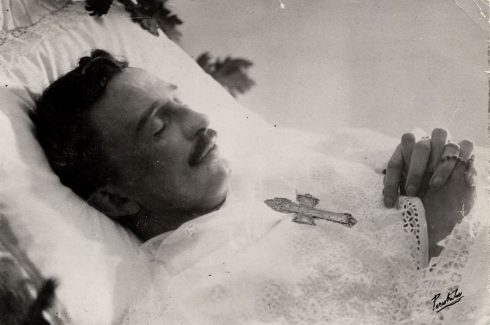
Anyway, I'd like to know why the prayer group, "Prayer League of Emperor Charles for the peace of the people," was given the designation an "ecclesiastical prayer group," in 1963 by Benedict XV.  It seems like any other prayer group, I have known, only more of them, world-wide.

When Charles was born, Austria was teeming with discontent.  Remember the assassination of Archduke Ferdinand set off WWI. As a child, a stigmatic nun prophesized that Charles would have much trouble in his life as emperor and as a father and leader.  A prayer group was set up specifically to pray for him, as he grew.

Countess Karolyi cursed Emperor Franz Joseph because he executed her son.  

"May heaven and hell blast your happiness! May your family be exterminated! May you be smitten in the persons of those you best love! May your children be brought to ruin, and may your life be wrecked, and yet may you live on in lonely, unbroken and horrible grief to tremble when you recall the name of Karolyi!"

Ah, a prayer group dedicated to praying for the future Emperor would be a good idea. Charles died age 35, leaving behind 8 children.  The prayer group then prayed for his beatification, which did happen in 2004.  Now the prayer group continues to pray for varia, especially peace.


Tuesday, April 1, 2025

Last Words

 Assist

Last words before execution are the final statements made by individuals facing death, often reflecting their thoughts or feelings at that moment. These words can vary widely, from expressions of love to declarations of innocence or peace.

Auto-generated based on listed sources. May contain inaccuracies.


I just spent some time reading some "last words," some have spoken.  I find them odd.  What were they really thinking?  Did they understand where they were going?


Anyway, one who did understand, was Jesus.  Being omniscient, He knew He was going to be executed, and what did He say?

 Do this in memory of me.


Doubt

 It always bothered me that when John the Baptist was in prison, he sent his disciples to ask Jesus if He were the Messiah. Doesn't John...